Beyond the Web: The Hidden Body and Tailored Venom of Spiders
Updated 8/6/2026
0 views
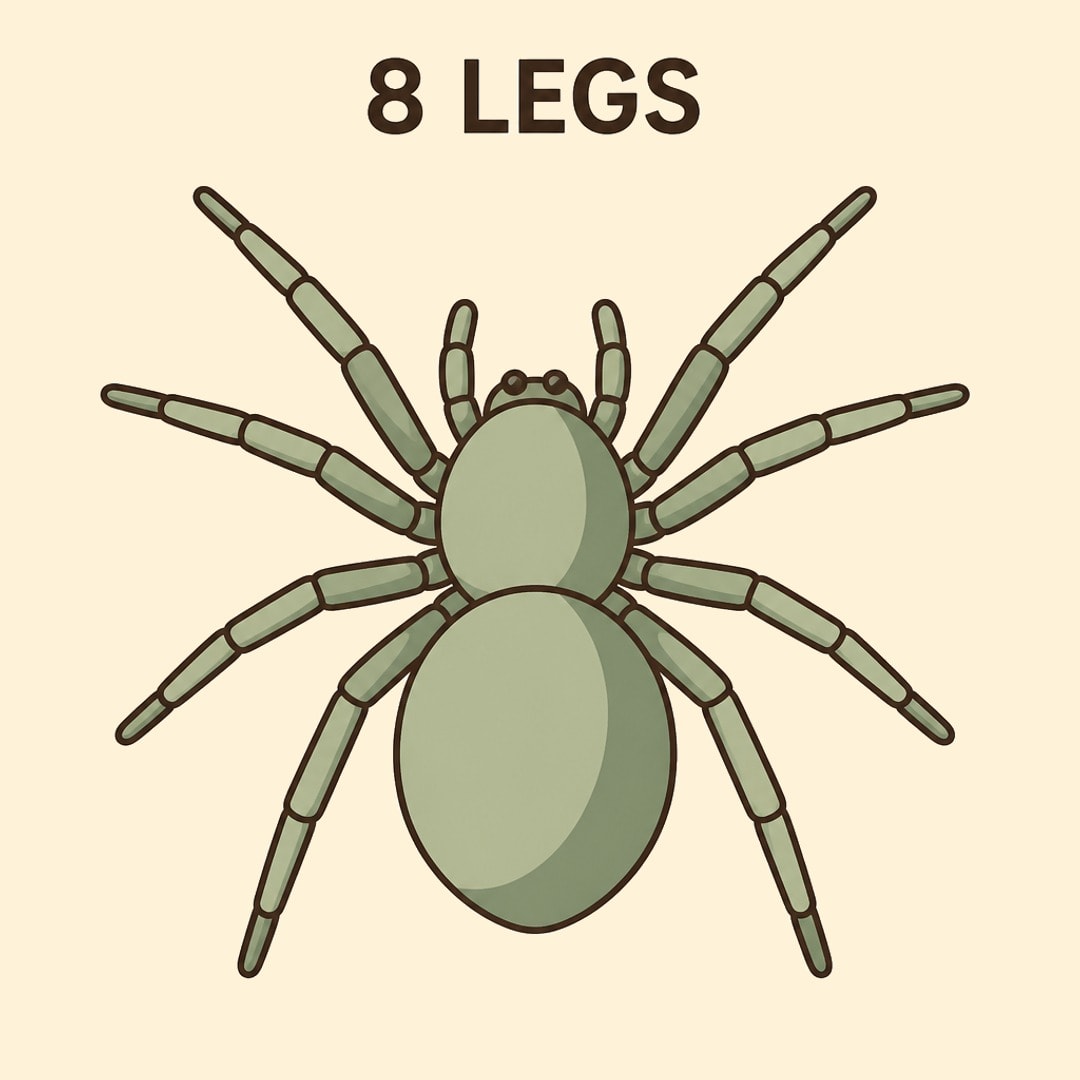
Spiders belong to a large family of animals called arachnids, which also includes scorpions, mites, and ticks. If you look closely at one, you will notice it looks quite different from an ordinary insect. It has eight legs instead of six, it has no antennae on its head to sense the world, and it possesses special mouthparts called chelicerae that end in fangs for delivering venom. These creatures have spent millions of years finding ways to survive in almost every habitat available on our planet, adapting their bodies and behaviors to conquer nearly every environment they encounter.
To understand how a spider's body works, we have to look at its two main sections. Their body is split into two clear sections. There is the cephalothorax, which is the head and chest fused together, and the abdomen. These two parts are held together by a narrow waist called the pedicel.
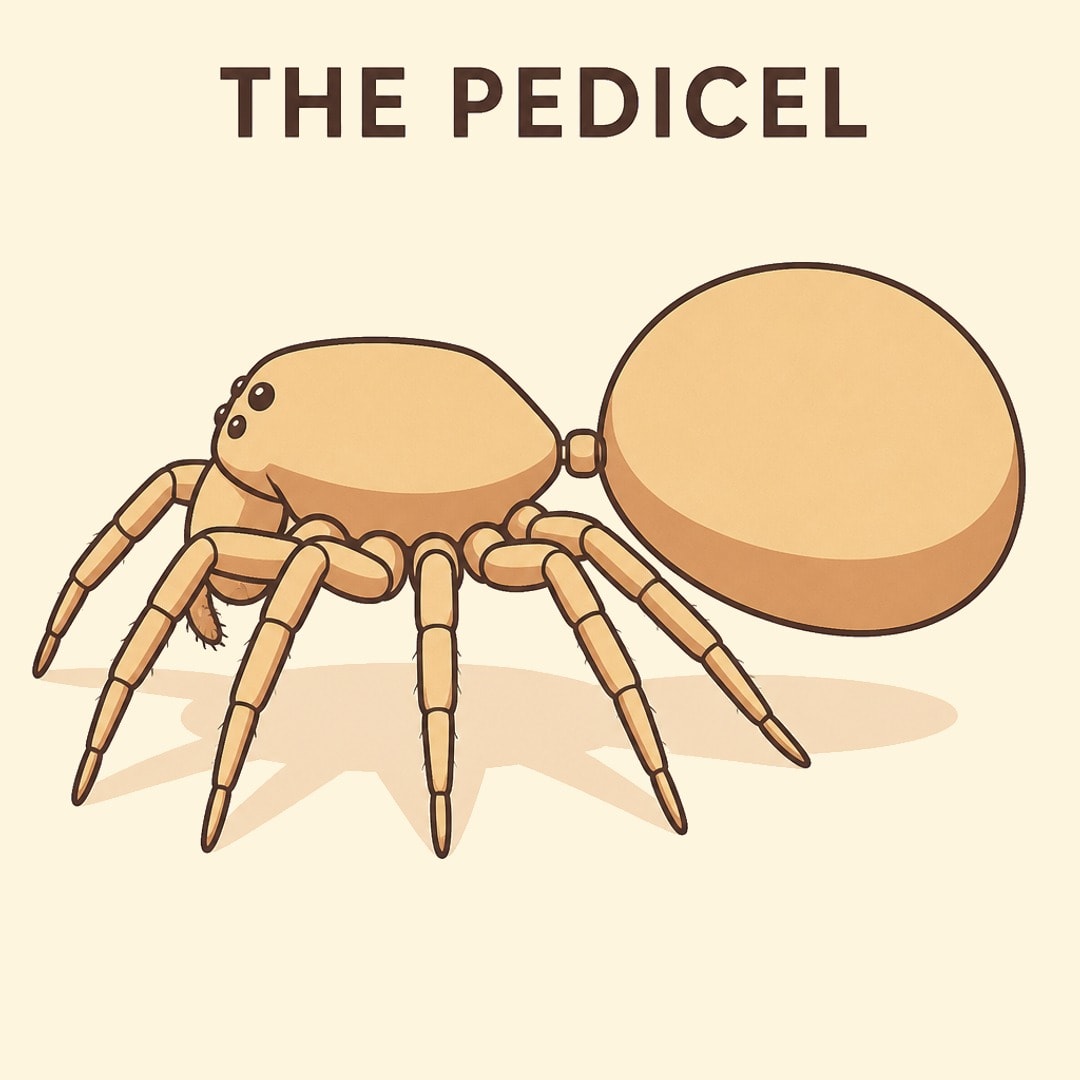
This narrow waist acts like a flexible joint between the front and back halves of the body, allowing the animal to twist and turn easily as it moves around. The front section holds the eyes, the walking legs, and the mouthparts, while the back section handles digestion, breathing, and making silk. By separating the sensory and movement center from the digestive and reproductive machinery, the spider gains incredible agility. This design lets them squeeze into tight spaces, climb vertical walls with ease, and position their bodies precisely when building complex webs or ambushing passing prey.
Most of these creatures are famous for their webs. They produce silk from organs at the end of their abdomen called spinnerets. This silk is made of protein and helps them create homes, trap their meals, or wrap up their eggs for protection.
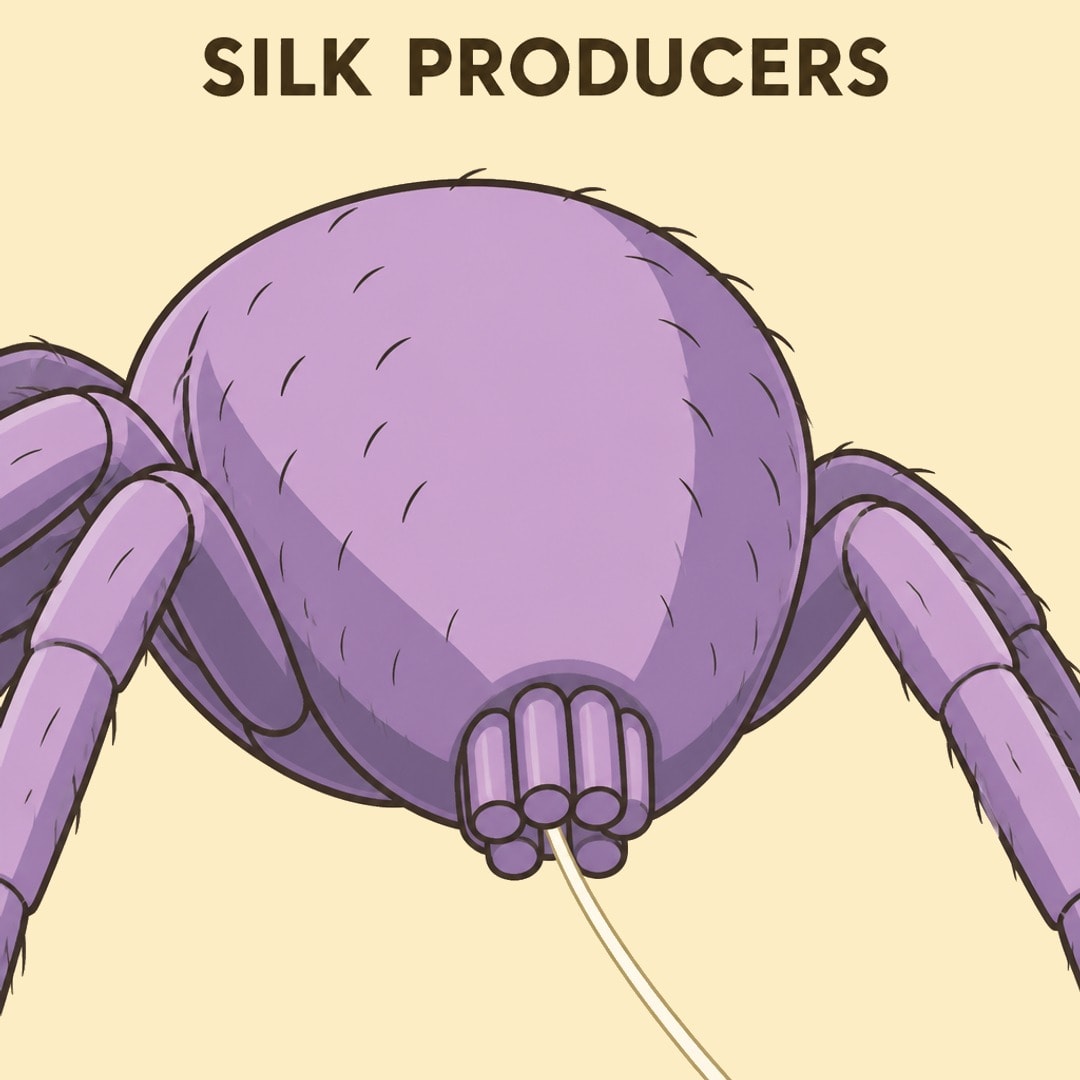
Spider silk is an amazing material because it is both incredibly strong and very stretchy. When a spider wants to build a trap, it squeezes liquid protein through its spinnerets into the air, where it instantly hardens into a solid thread. Different glands produce different types of silk, so the animal can spin sticky lines to catch flying bugs, dry lines to walk on safely, or a thick, protective blanket to keep its eggs safe from harm until they hatch. This silk starts as a liquid stored inside the abdomen under high pressure. Once it exits the tiny spigots on the spinnerets, the molecules line up in a specific way that turns the liquid into a solid fiber stronger by weight than steel cable, allowing them to stop heavy insects flying at high speeds without breaking their traps.
While almost all spiders use venom to handle their prey, there are exceptions. The group known as Uloboridae, for example, actually has no venom glands at all.
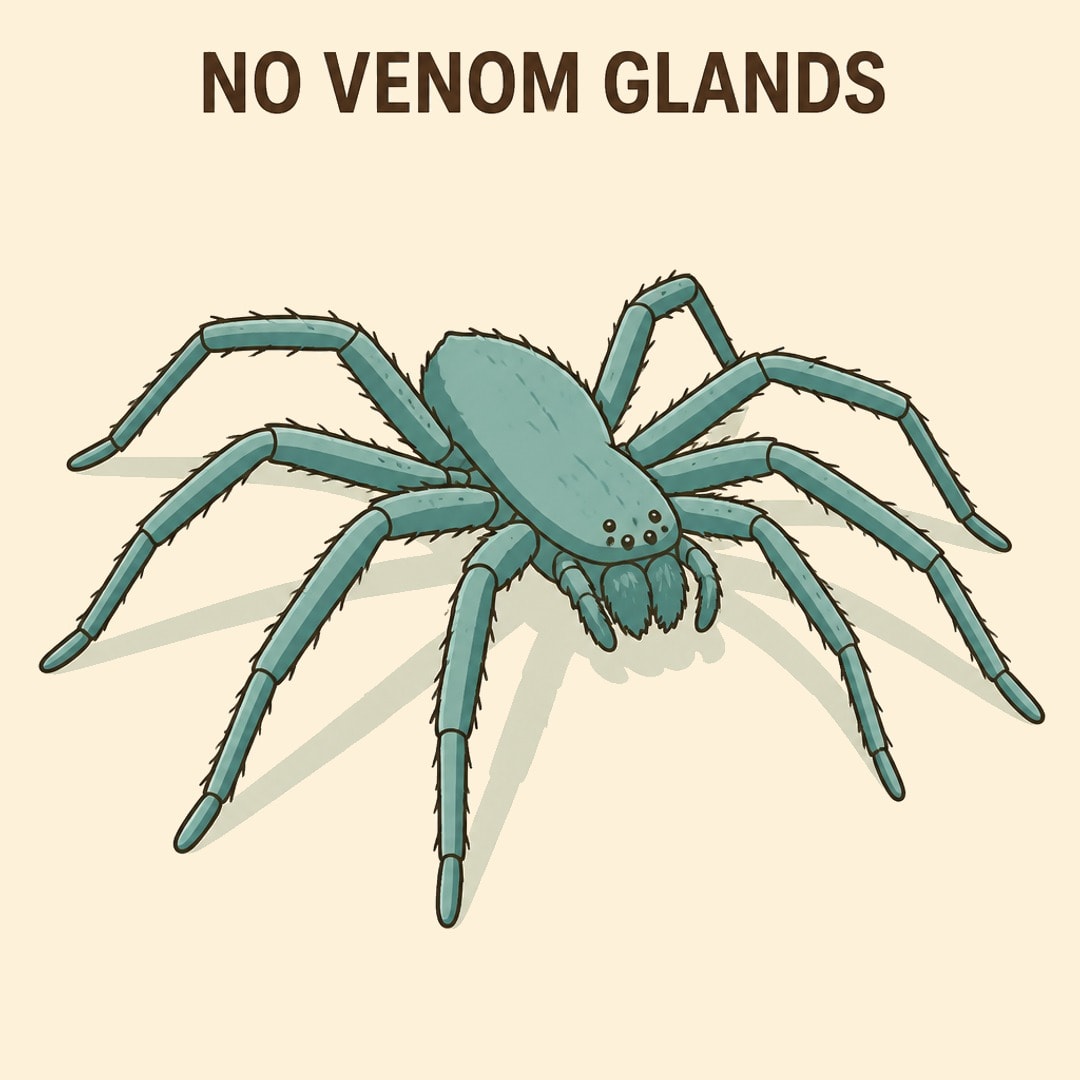
Instead of injecting a chemical to immobilize their meals, these particular spiders rely entirely on wrapping their captives in massive amounts of silk until the insect cannot move or breathe anymore. They then pour digestive juices directly onto the wrapped meal to dissolve it before slurping it up. For the vast majority of other species, however, venom is the main tool used to stop a struggling insect quickly. Without venom, these specialized spiders must rely purely on physical restraint, showing how diverse survival strategies can be within the same animal group, even when facing the exact same dietary challenges.
A study from 2025 found that spider venom is highly specialized. It becomes much more effective depending on how closely related the spider is to its natural prey. It shows that over time, their venom has evolved to be the perfect match for the specific insects they hunt.
Scientists discovered that a spider's chemical weapon is not just a general poison. It is fine-tuned to target the nervous system of the exact kinds of bugs that particular species usually eats. If a spider hunts fast-moving flies, its venom works rapidly on those specific insects, saving the hunter from a long and dangerous struggle. This evolutionary matching means that a spider's venom contains a complex cocktail of molecules tailored over generations, ensuring that energy is never wasted during a hunt and that dangerous prey is subdued before it can fight back and injure the hunter.
Spiders have successfully spread across nearly every corner of the planet, with the notable exception of the freezing landscape of Antarctica. From the variety in their hunting styles to the protein chemistry in their silk, these are far more than just common household visitors.

From steamy tropical rainforests to dry deserts and quiet suburban gardens, these animals have proven to be master survivors. They play a huge role in keeping insect populations balanced across the globe, proving that these eight-legged hunters are far more than simple household pests. Because they consume vast numbers of insects every single day, they act as a natural control system that protects plants and crops from becoming overwhelmed by pests.
Next time you spot a tiny web in the corner of a room or a shimmering trap in the garden, remember the complex biology at work. From their jointed bodies and protein threads to their tailored venoms, spiders represent one of nature's most successful survival stories.