The Hidden Truths Behind the Amazon's High-Voltage Living Battery
Updated 8/4/2026
0 views
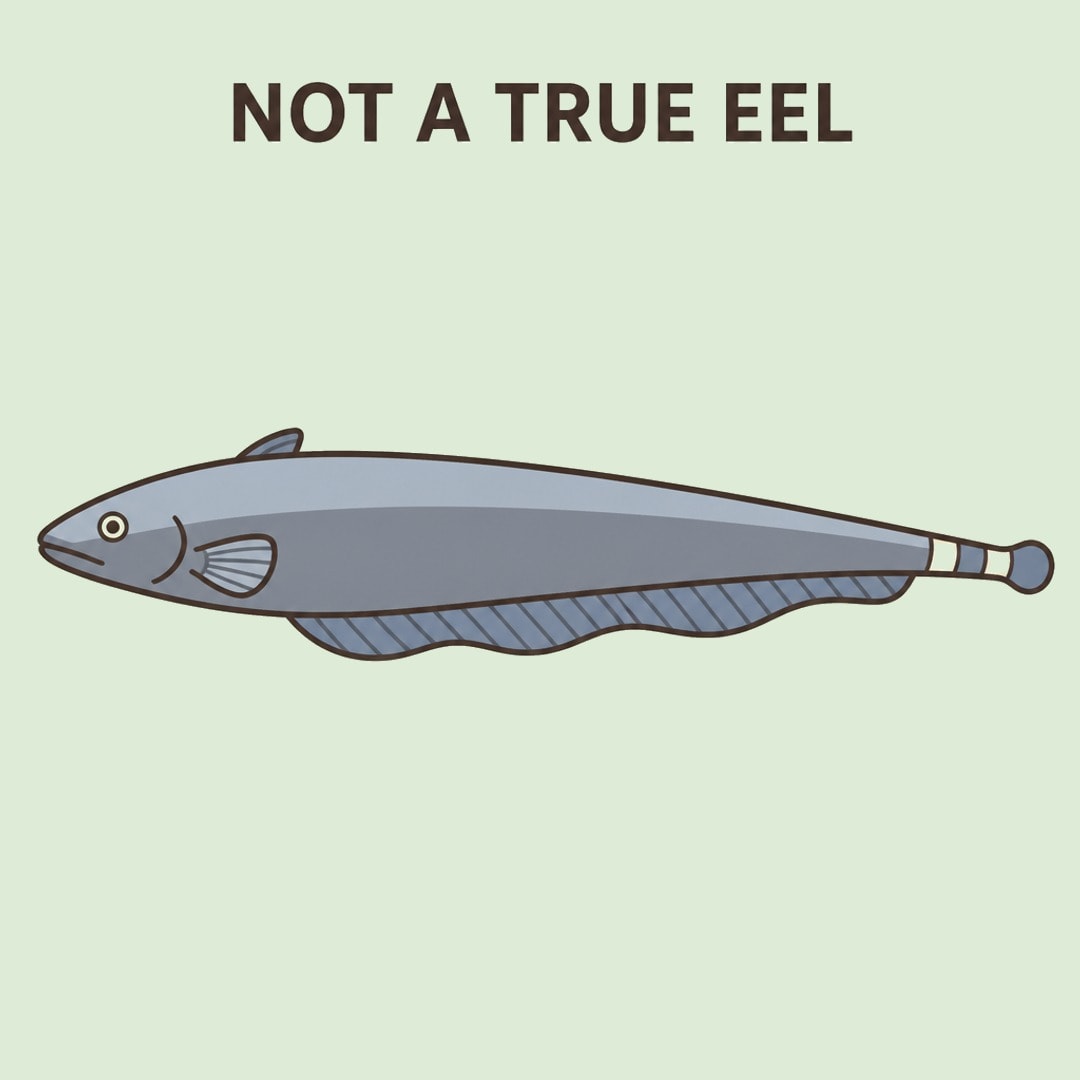
Look closely at the creature known around the world as the electric eel, and a surprising truth comes to light. Even though people have called them eels for generations, they do not belong to the true eel family at all. Instead, biologists group them with a completely different family of fish called knifefishes. These animals share a common ancestor with catfishes and other fish that have smooth bodies without scales. Over millions of years, they took a very unusual evolutionary path. They developed the ability to generate powerful electric currents from specialized cells inside their bodies. This biological superpower helps them survive in murky environments where ordinary predators would struggle to find a single meal, letting them navigate and hunt in pitch-black waters.
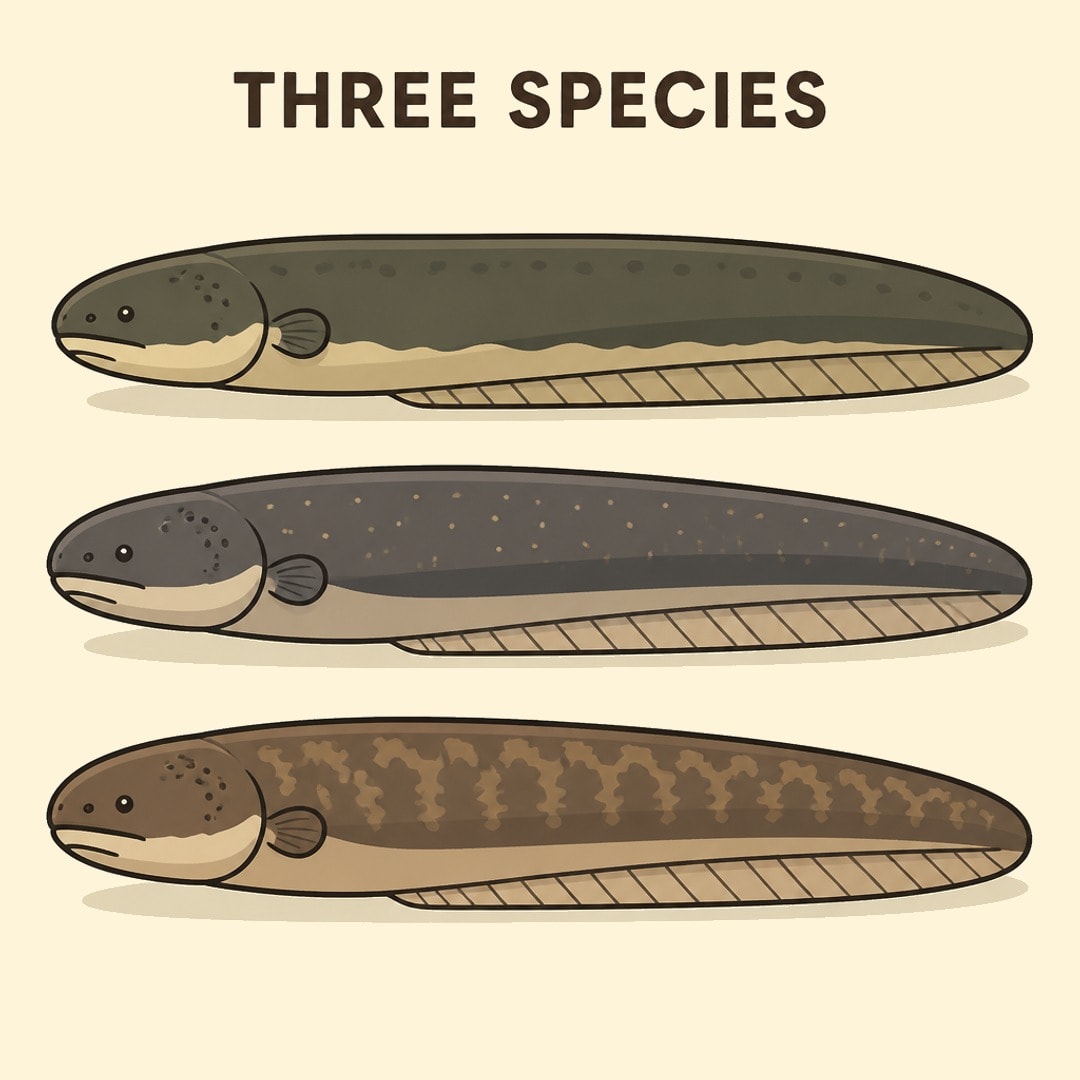
For a long time, scientists thought all these electric creatures belonged to just one single species spread across South America. A detailed scientific study published in recent years changed that view completely. Researchers looked closely at the genetic makeup, body shapes, and living habits of these fish from different river systems. They discovered that the group actually contains three distinct species. One keeps the original scientific name, while the other two are newly recognized types adapted to their specific home regions. Each type has evolved slight differences in its body and its ability to handle electricity, proving that nature found more than one way to build a living battery tailored to local river conditions.
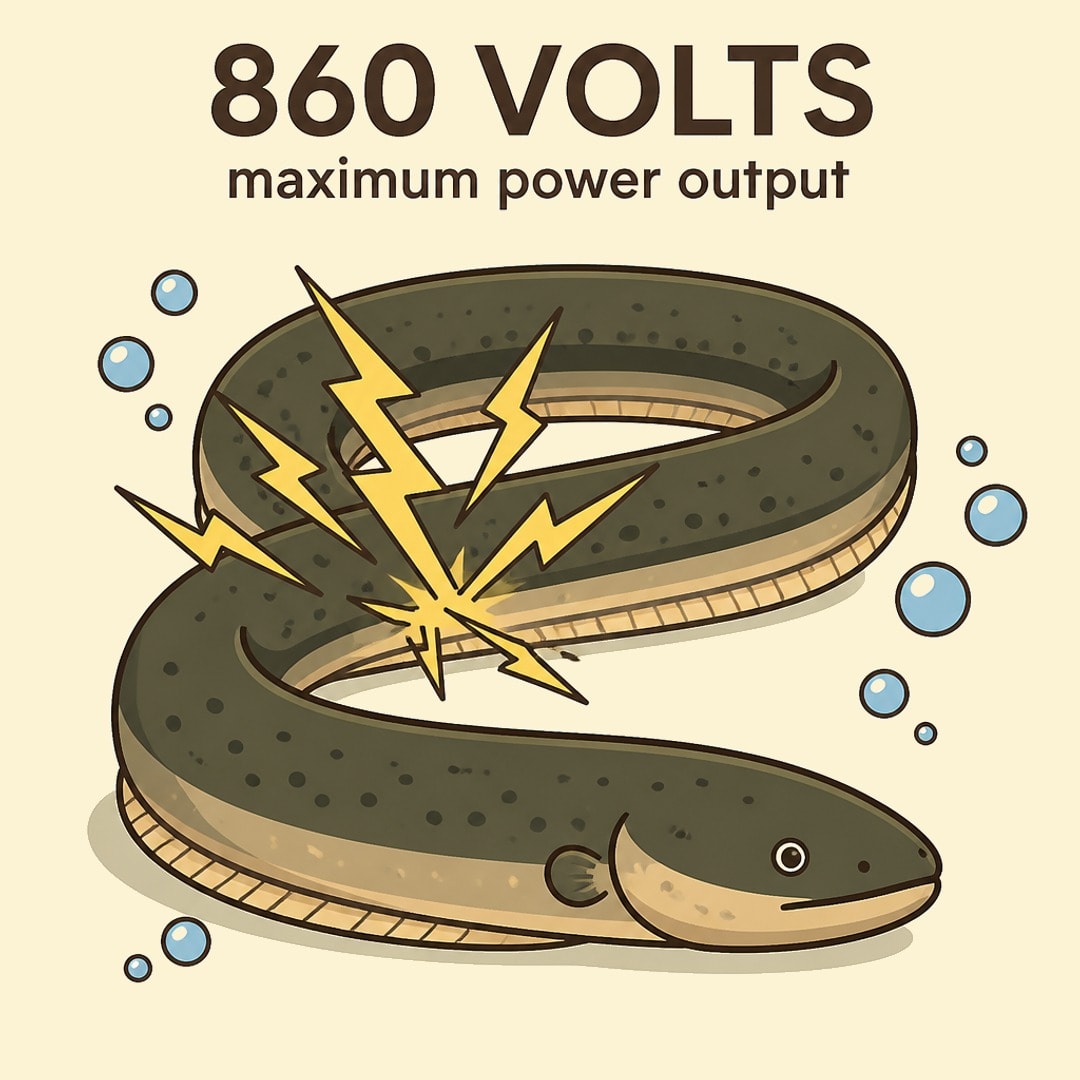
Among these newly separated species, one stands out for its staggering power output. Known by its scientific name as Electrophorus voltai, this particular type holds the record for the highest voltage ever measured in these animals. In scientific tests, individuals of this species have produced a stunning shock of up to 860 volts. To understand how massive that number really is, think about the electricity that powers everyday appliances in a typical house. The wall outlets in most homes supply a fraction of that voltage. Reaching 860 volts means a single fish can generate a force strong enough to overwhelm almost any potential threat or prey in its immediate area, offering a complete defensive and offensive advantage.
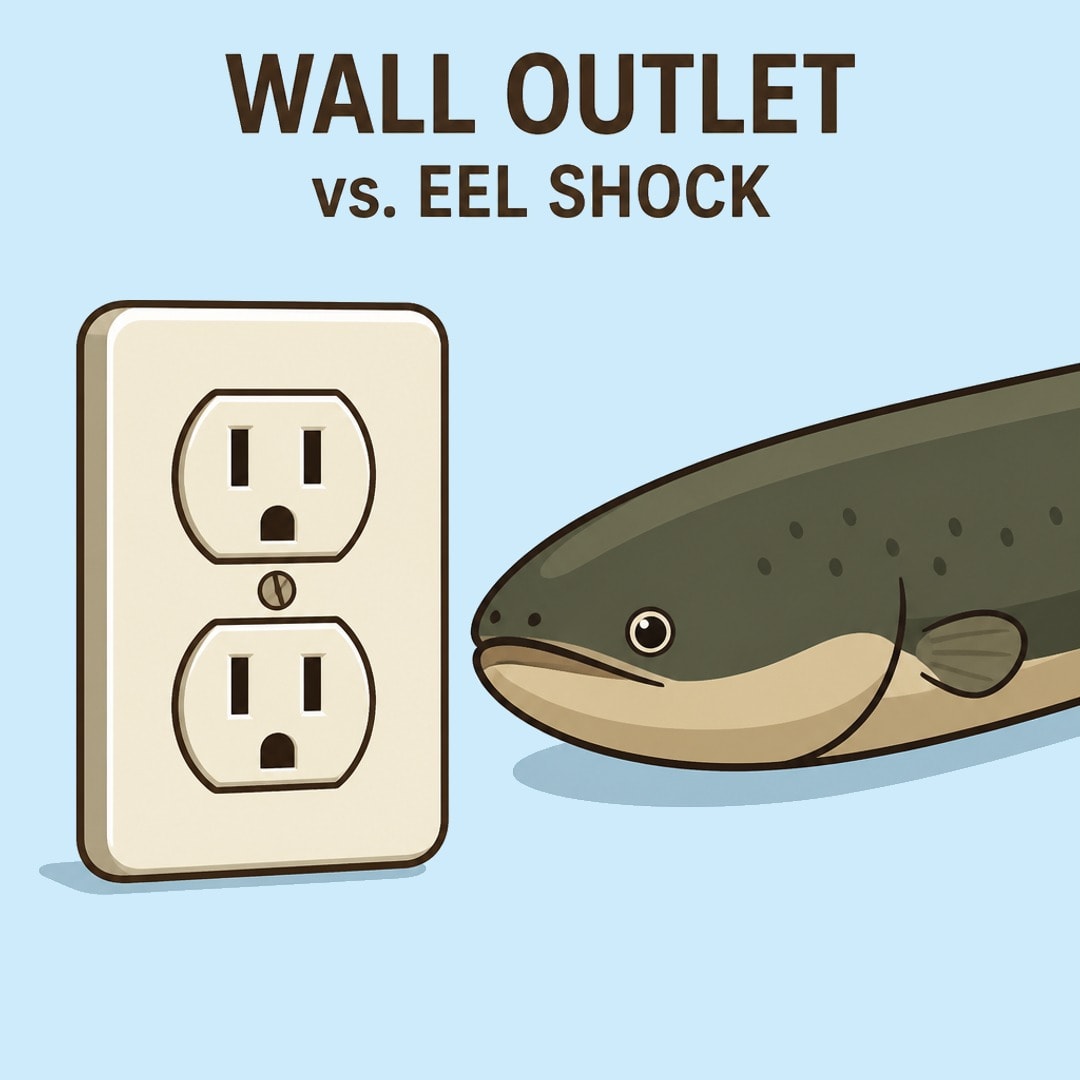
Translating that much electrical power into a real-world comparison helps show why this animal is such a dominant force in its habitat. A standard household electrical system operates at a much lower voltage than the maximum shock this Amazon predator can unleash. When this fish releases its full energy, the resulting surge far exceeds the power running through standard wall plugs. This biological generator packs its power into specialized organs that take up a huge portion of the creature's total body length. Millions of tiny, battery-like cells work together in a coordinated wave, discharging all at once to deliver a sudden and powerful jolt that instantly stops movement in nearby targets.
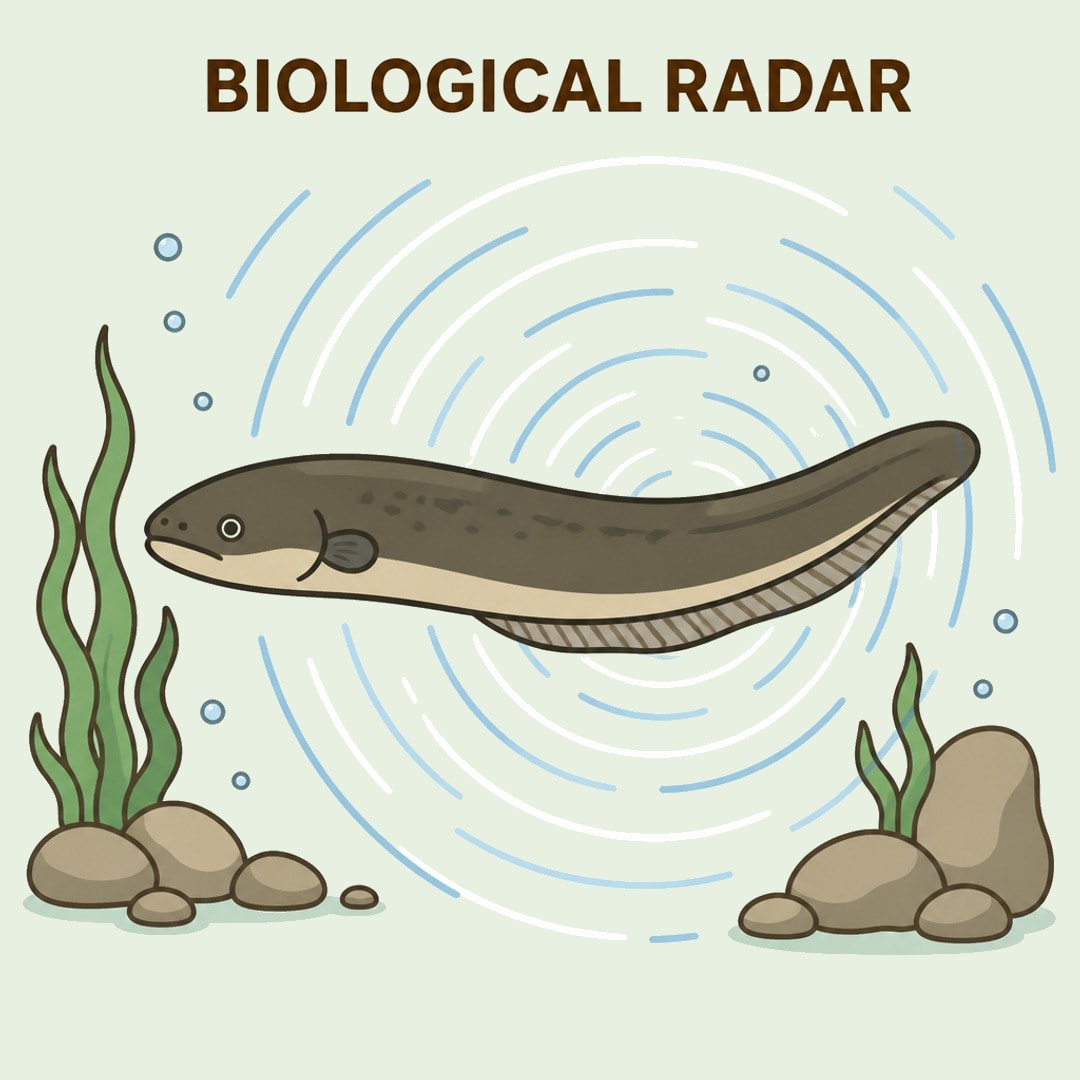
Living in dark, murky river waters creates a major challenge for hunting and navigating safely. The eyes of these fish do not work very well, leaving them nearly blind in muddy or stained river channels where light cannot penetrate. To solve this problem, they developed a brilliant sensory system called electrolocation. They constantly send out weak, harmless electrical pulses into the water around them. These pulses bounce off nearby objects, rocks, and other swimming creatures, returning to special sensors on the fish's skin. This works much like a biological radar screen, letting the animal paint a detailed mental picture of its dark surroundings without ever opening its eyes, ensuring it never bumps into obstacles.
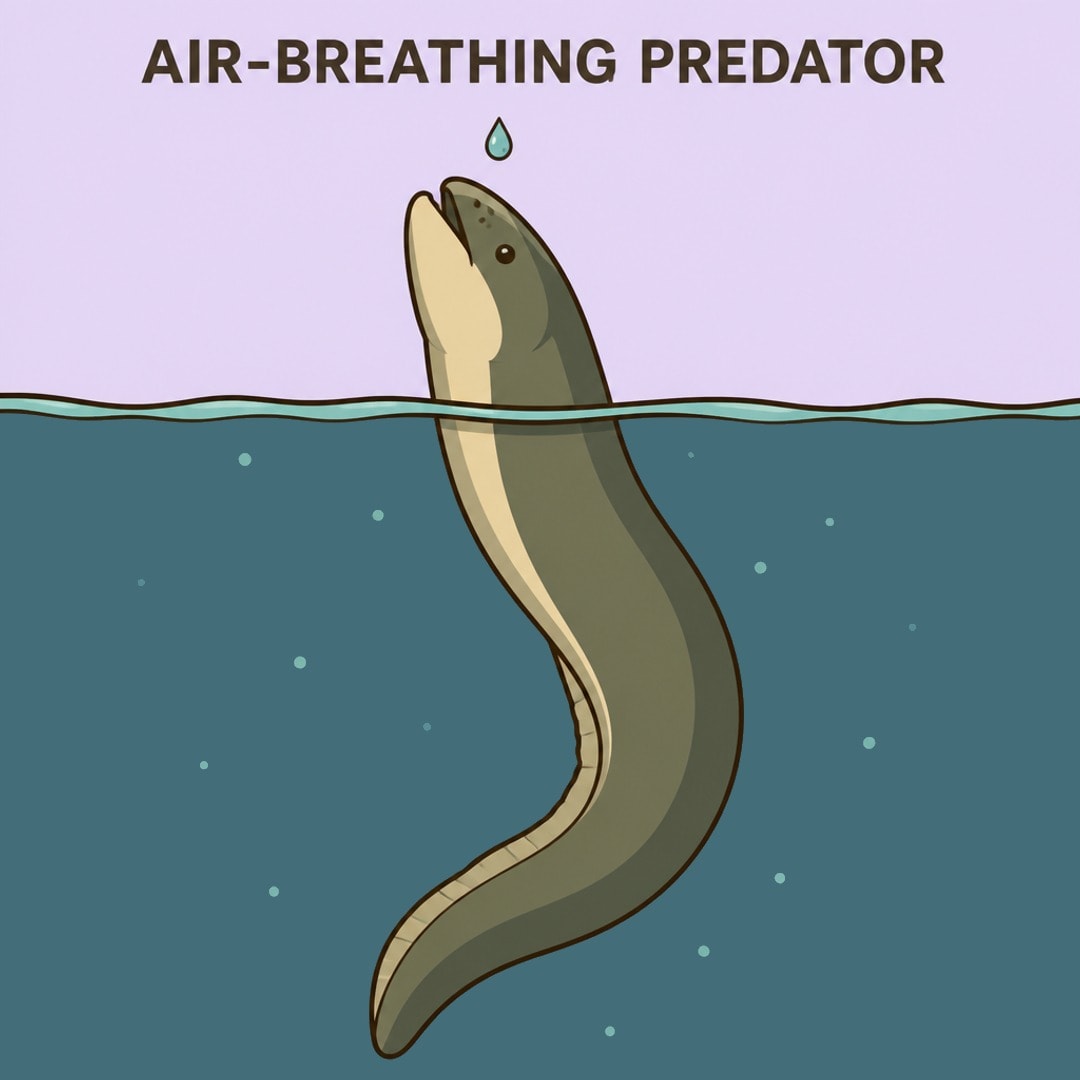
Another surprising trait of these creatures is how they handle the basic need for oxygen. Even though they live completely submerged in water, their gills alone cannot take in enough air to keep them alive in oxygen-poor tropical rivers. They must regularly swim all the way up to the surface of the river to gulp in fresh air directly from the atmosphere. This habit of breathing air makes them even more unusual as aquatic predators, requiring them to break the surface at regular intervals. Combining high-voltage defense, radar-like senses, and the need to breathe air, these remarkable animals have become absolute masters of the crowded, shadowy riverbeds they call home.
From their mistaken identity as true eels to their record-shattering voltage, these creatures show just how inventive nature can be. They turn the murky waters of the Amazon into their own high-tech hunting grounds, proving that some of the most fascinating science on Earth is hidden right beneath the surface.