How Cats Defy the Laws of Physics to Land on Their Feet
Updated 7/29/2026
1 views
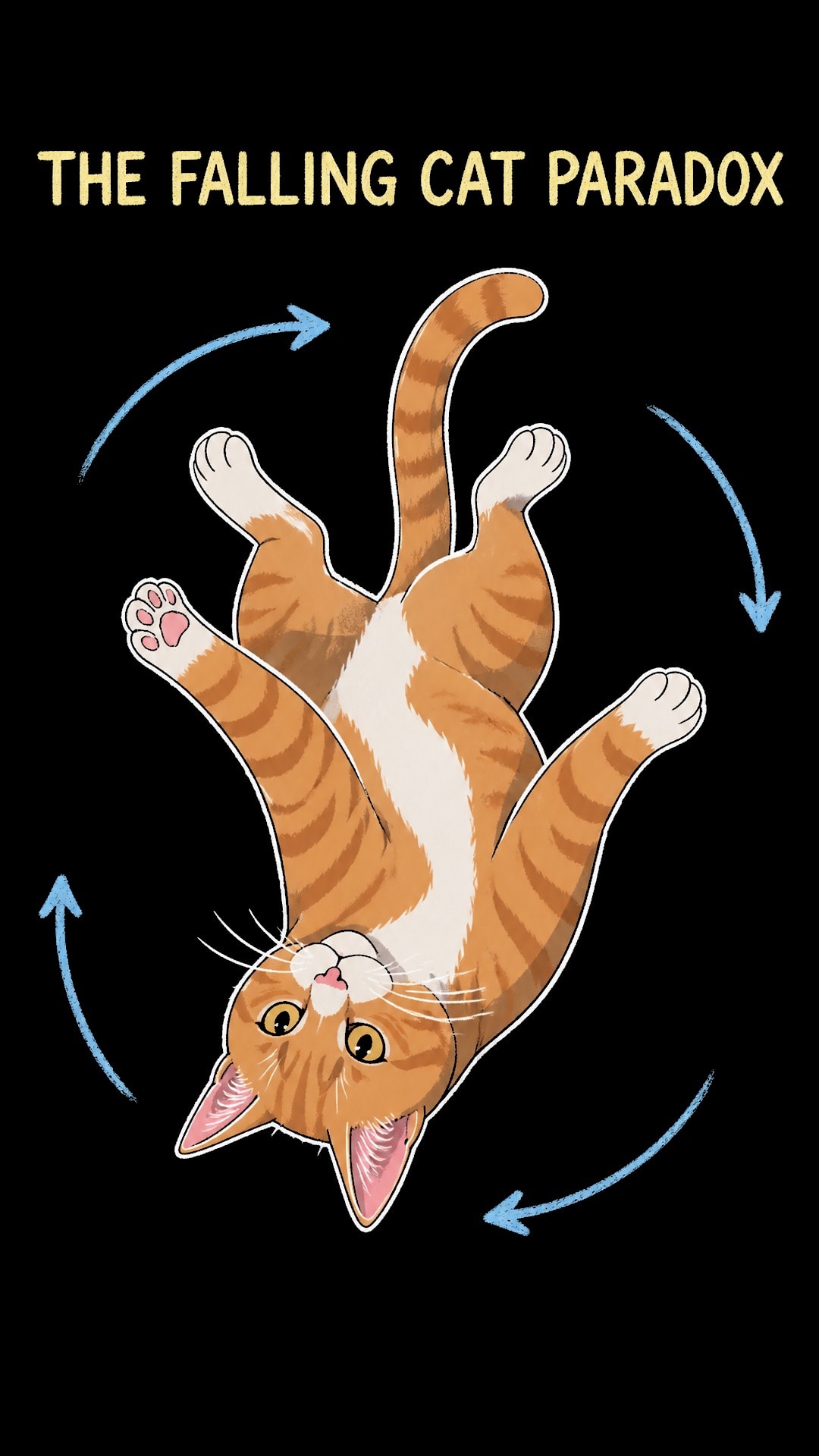
For a long time, the way a cat flips itself mid-air seemed like a direct challenge to our most basic understanding of the physical universe. According to the foundational law of physics known as the conservation of angular momentum, an object in freefall cannot change its rotation unless an outside force pushes against it. If you were to drop a solid, rigid ball, it would continue to tumble in exactly the same way it was first released because no external torque is acting upon it to stop the motion. A cat, however, seems to have its own set of internal rules. No matter how it begins a fall, it almost always manages to twist its body and adjust its orientation to land safely on its feet, all without ever touching a wall or another object to gain leverage. For decades, this appeared to be an impossible glitch, a mystery that defied the standard equations governing how objects move through empty space.
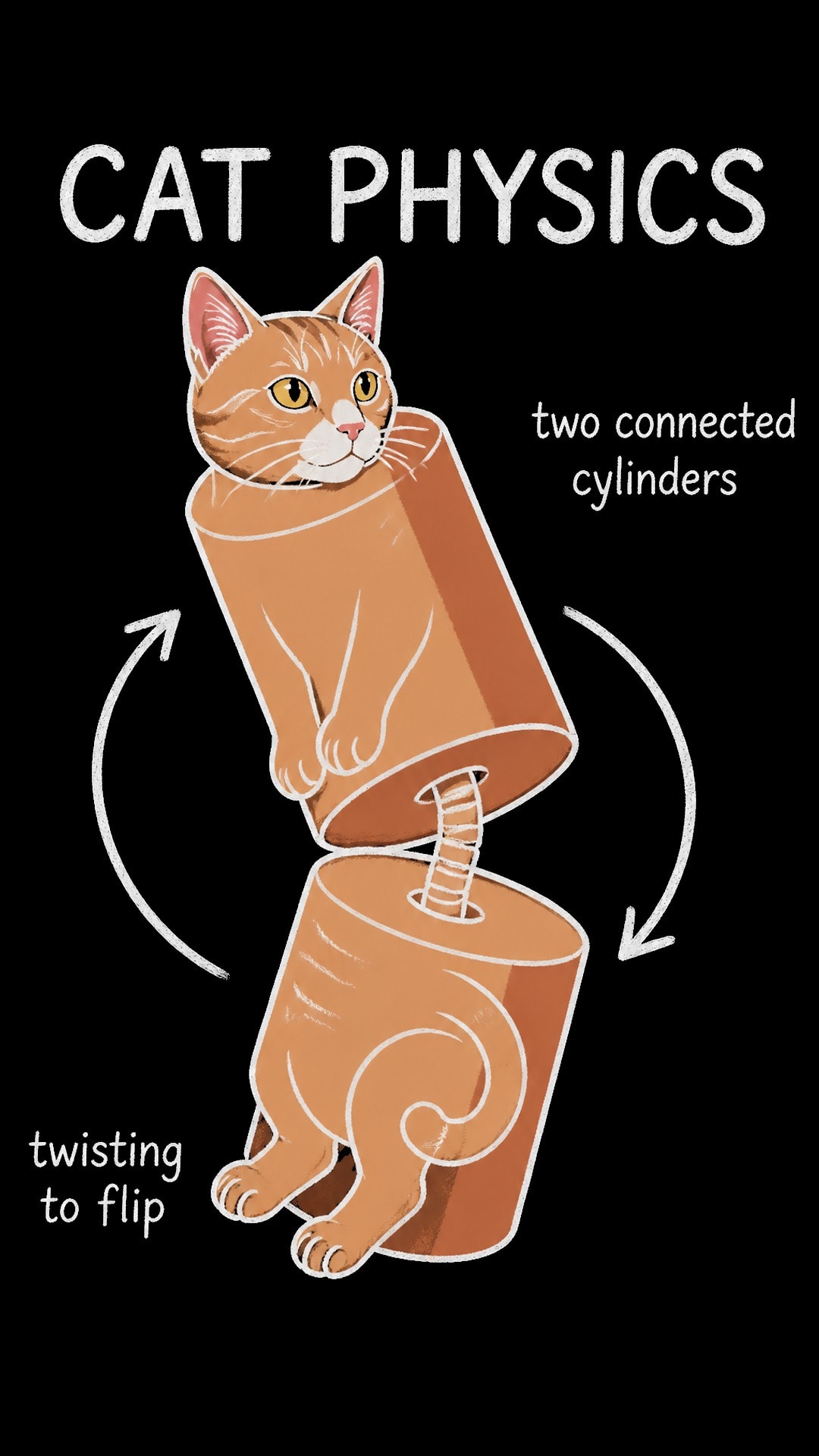
This behavior appeared to be a paradox for researchers until they began to look closer at what a cat actually is. The secret is that a cat is not a solid, rigid object like a brick or a marble. It is a complex system of flexible, connected parts that can change its shape while falling. In 1969, physicists T.R. Kane and M.P. Scher finally unlocked the mystery by creating a sophisticated mathematical model of the feline body. They represented the animal as two separate cylinders joined together, mirroring the front and back halves of the feline anatomy. By calculating how these two parts could rotate against each other while still being connected, they proved that a cat does not require an external force to turn. It simply uses its own body to redistribute its mass. By changing its shape, the cat can reorient itself while maintaining a net angular momentum of zero. This means that the total amount of spin in the system never actually changes; the cat just transfers the rotation from one part of its body to the other, creating the illusion of a full-body turn out of thin air.
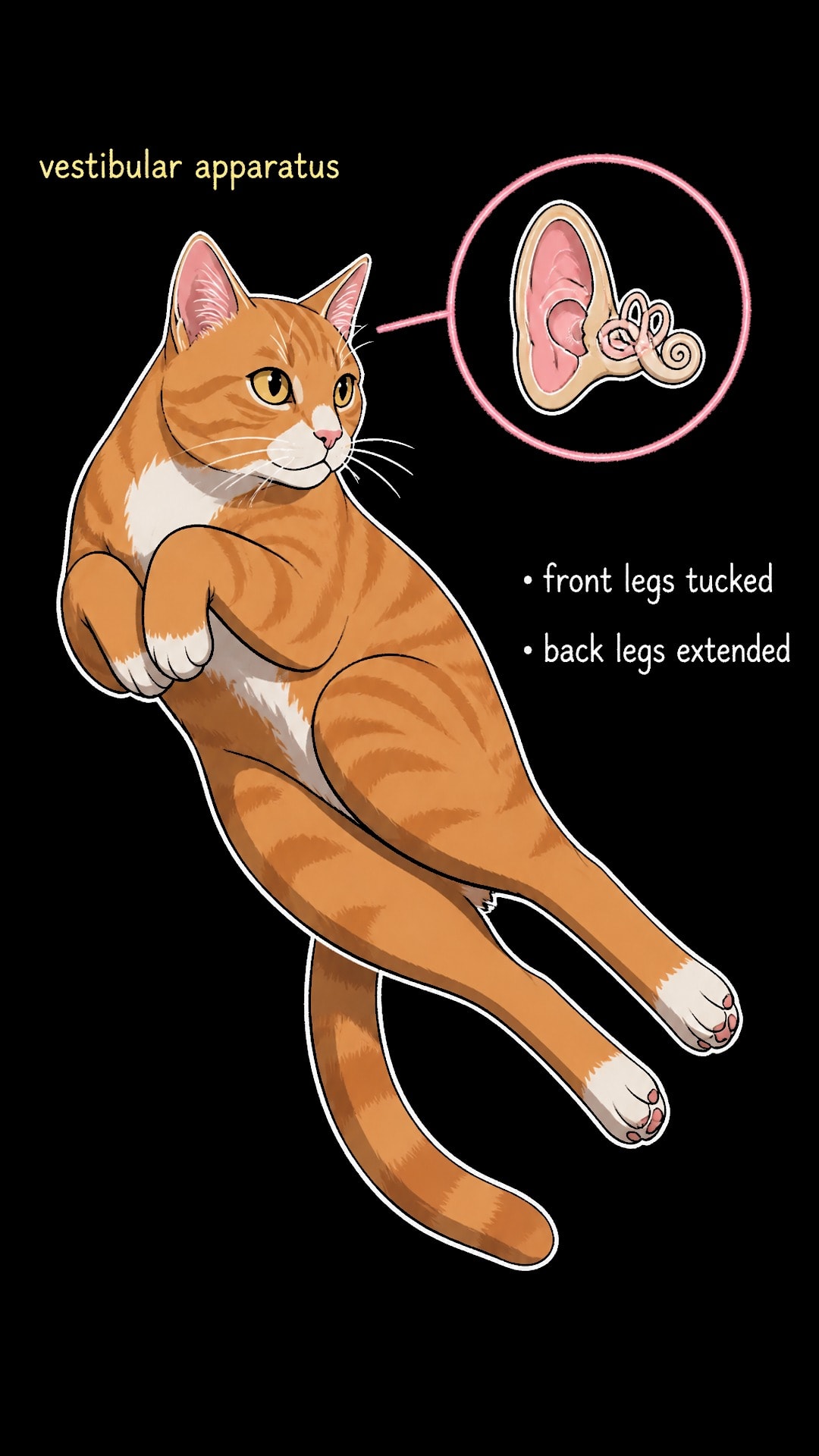
This entire process is managed by an incredibly fast, highly tuned internal communication system. It all begins deep inside the skull within the inner ear. Here, a structure called the vestibular apparatus acts like a tiny, high-precision biological sensor. This system is responsible for detecting the cat's orientation relative to the pull of gravity the exact moment it loses contact with a surface. Once the cat registers that it is falling, the brain sends a rapid signal to the muscles to initiate a specific sequence of movements. To start the flip, the cat pulls its front legs tight against its chest while extending its back legs outward. This movement is a calculation of inertia. Because the front half of the body is now pulled into a more compact shape, it can spin very rapidly. Meanwhile, the back half of the body remains stretched out and stable, acting as a temporary anchor that prevents the whole cat from spinning aimlessly in the wrong direction.
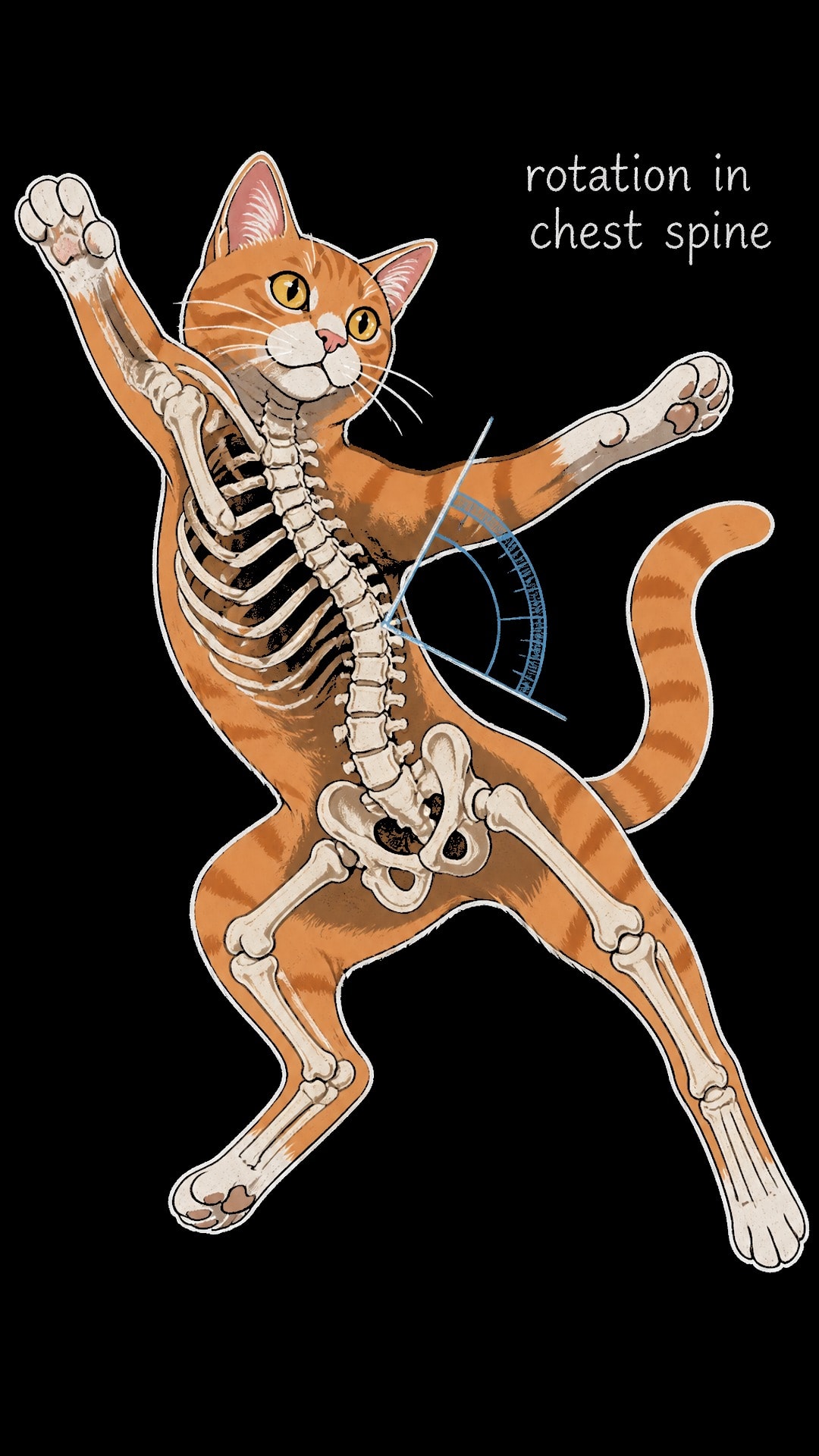
This extreme maneuver is only possible because of the cat’s unique and specialized anatomy. The upper part of the spine, known as the thoracic spine—the section located in the chest area—contains a special zone that is remarkably flexible. This section can rotate by about forty-seven degrees, which is roughly one-eighth of a full circle, with almost no physical resistance from the skeleton or the surrounding ligaments. This allows the cat's front shoulders to snap around toward the ground almost instantly, giving the animal a critical head start on the landing. Without this specific range of motion in the chest area, the cat would not be able to initiate the twist quickly enough to recover its balance before hitting the floor. Think of it as a biological hinge that is designed to unlock at the exact moment the cat senses a tumble, allowing the head and shoulders to pivot while the lower body waits for its turn to follow.
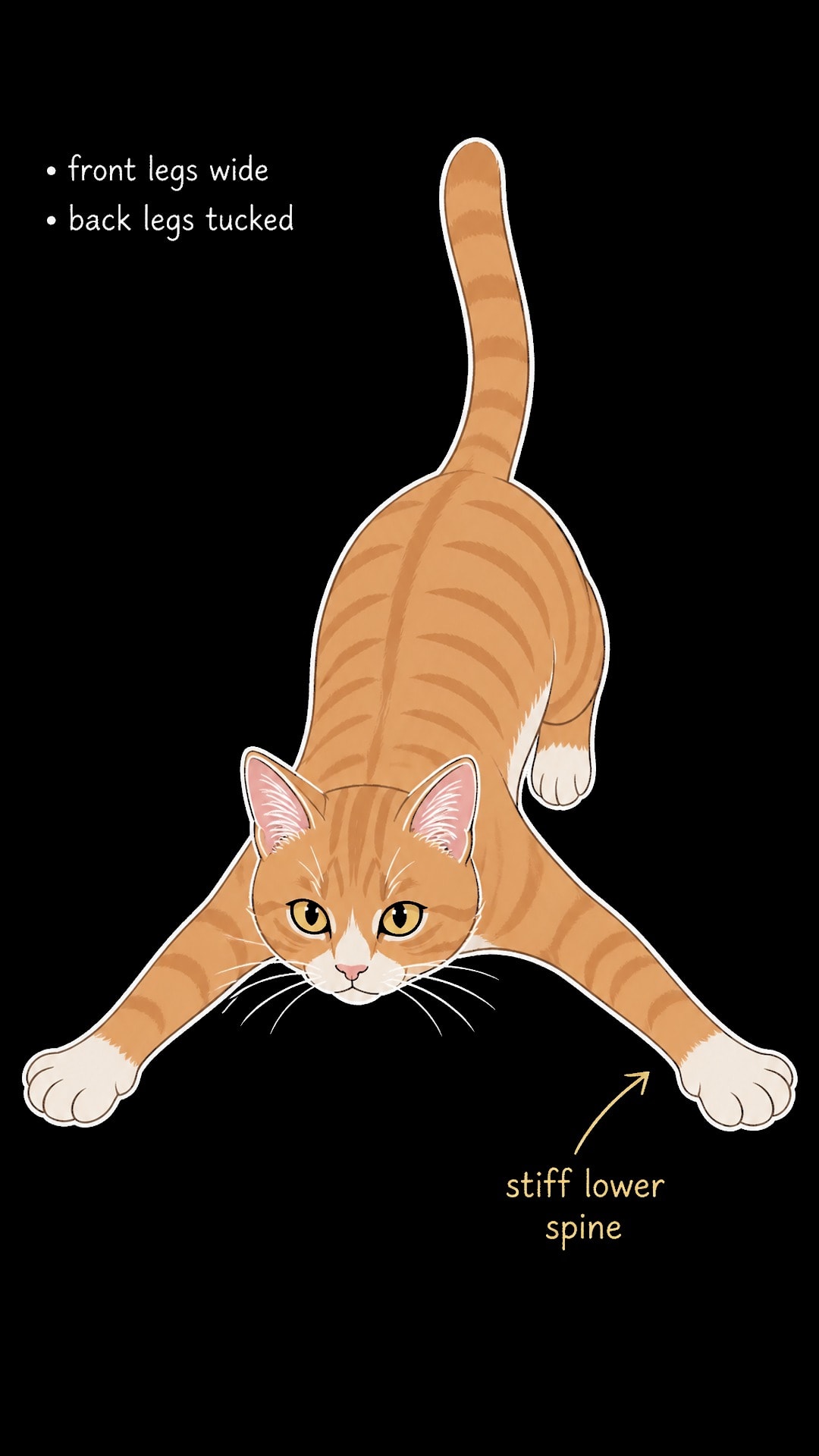
Once the front half of the body has turned toward the ground, the cat must bring the rest of its body into alignment to finish the landing. To complete the flip, it reverses the earlier physics trick. It throws its front legs wide open, which acts like a pair of brakes, creating enough air resistance to significantly slow the rotation of the upper body. Simultaneously, it tucks its back legs in close to its stomach. This movement decreases the inertia of the rear section, allowing the hips and hind legs to spin quickly to catch up with the front. Throughout this final phase, the lower part of the spine, or the lumbar spine, stays completely stiff and rigid. This structural support is vital because it turns the rear half into a stable landing platform. The lumbar spine acts as a shock absorber, helping the cat withstand the impact and maintain its balance as it touches down on all four feet at once.
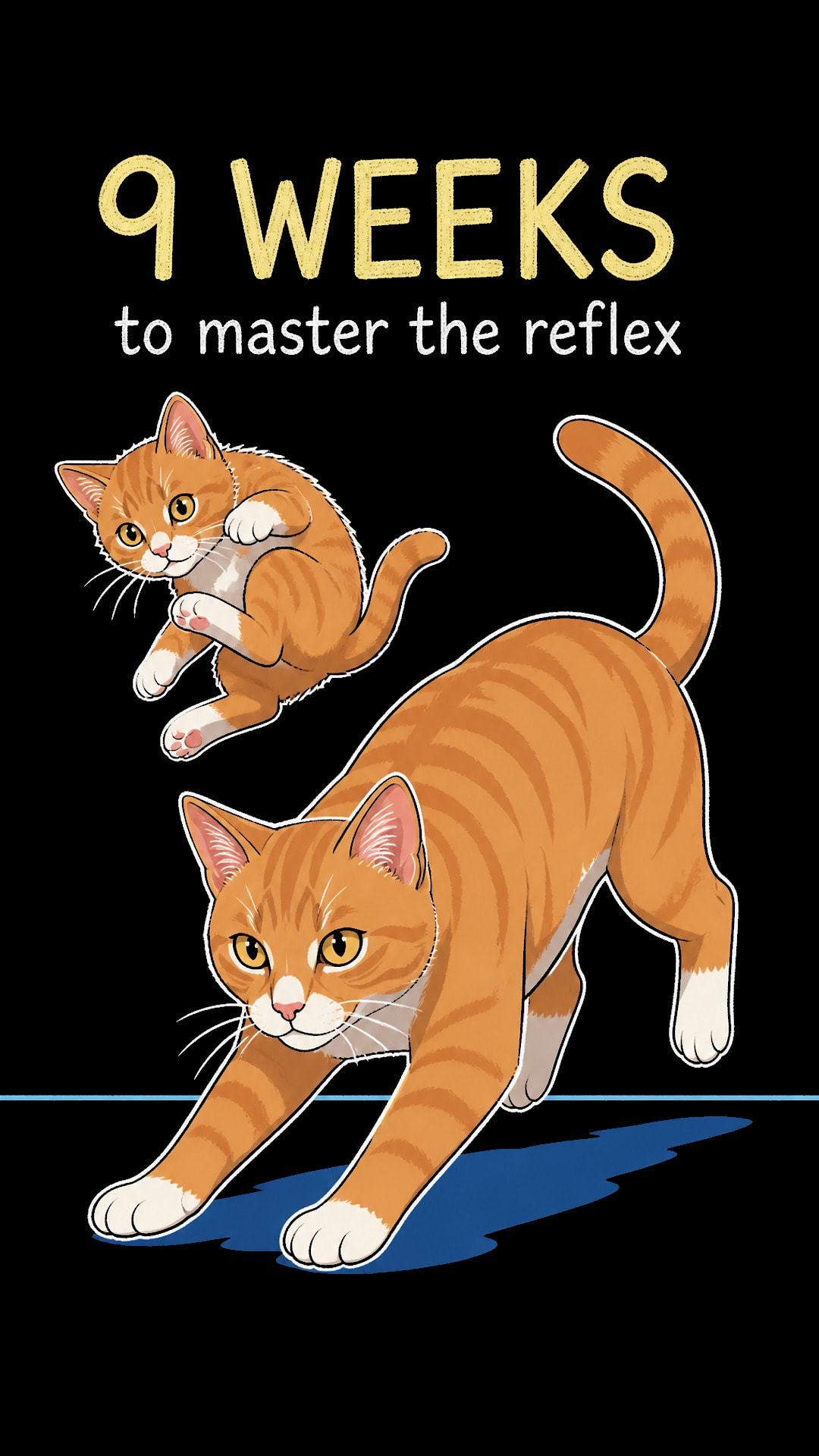
This remarkable ability is not something a cat is born with, but rather a complex skill that matures alongside the animal as it grows. Kittens typically begin testing this sequence when they are about three or four weeks old, and they usually master the physics of the landing by the time they reach nine weeks of age. The reflex relies on a combination of a highly flexible spine and a non-rigid collarbone arrangement, which allows the shoulders to move entirely independently of the rest of the body. This level of biological agility is a true masterclass in mechanical design. So, the next time you see a cat stick a perfect, effortless landing, you are witnessing far more than just natural grace. You are watching a living, breathing physics engine solving a complex movement equation in a fraction of a second, proving that even a simple jump is governed by the laws of our world.