What Happens to Our Food and Planet the Day the Bees Vanished
Updated 8/6/2026
1 views
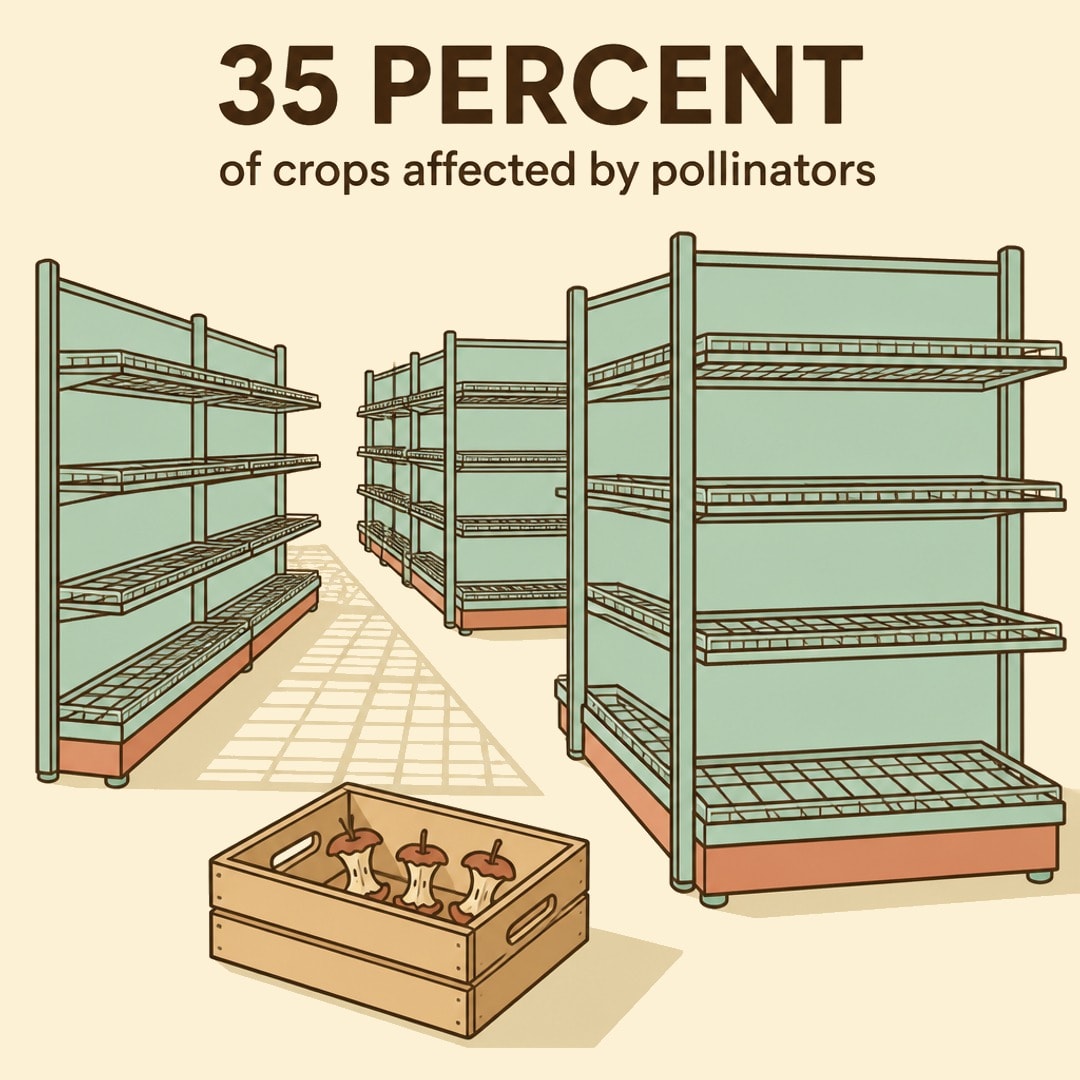
Imagine waking up to a world where the familiar buzz in the garden is completely gone. If honeybees were to vanish from our planet today, the change would not start with wild animals or remote forests. It would start right in our kitchens and grocery stores. The food we take for granted every single day relies on a silent, hardworking workforce that moves quietly from plant to plant. Without them, our entire way of eating and living would change almost overnight, revealing just how deeply human survival is tied to the lives of these small insects.
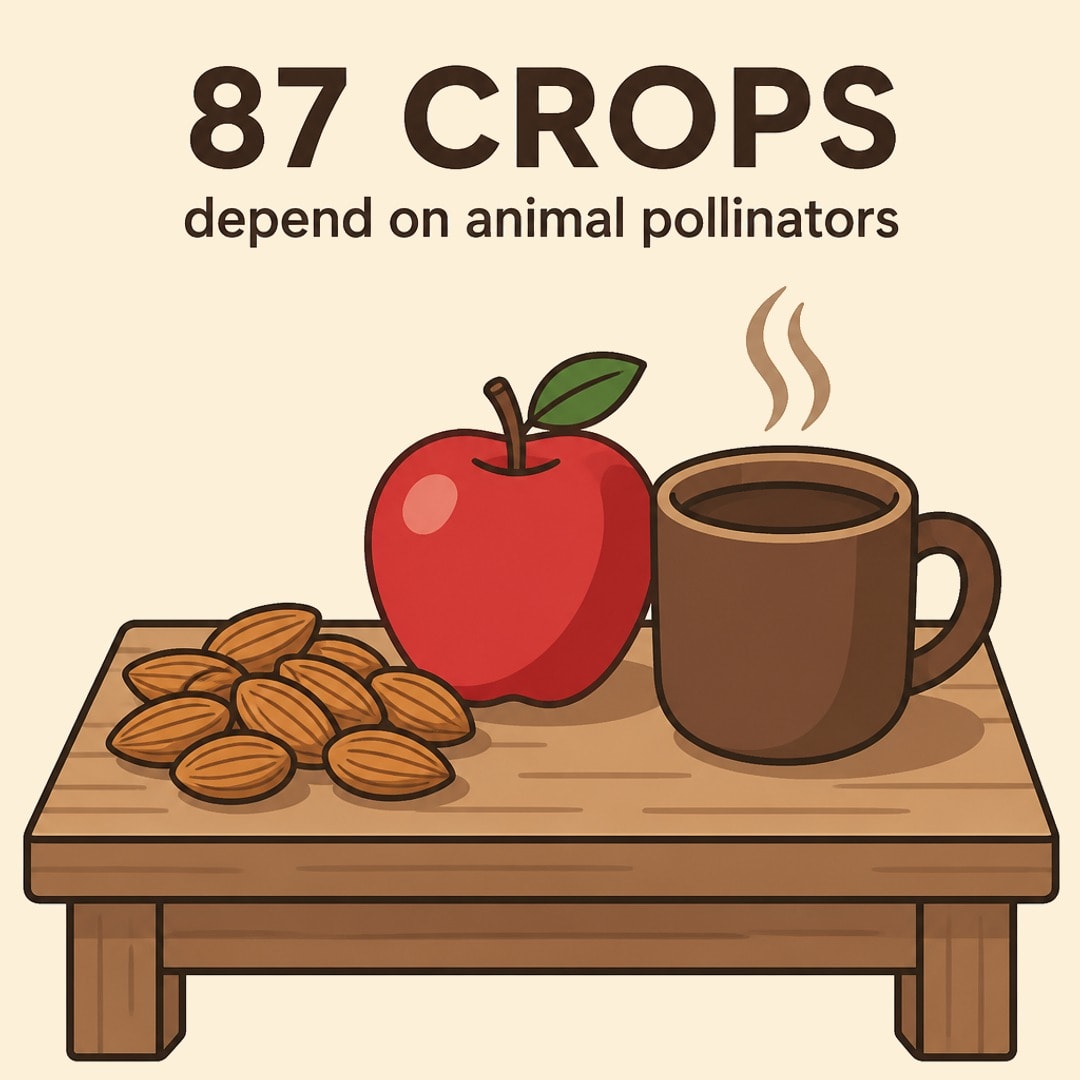
That vulnerability exists because about thirty-five percent of the world’s food production depends entirely on animal pollinators like bees. When we look at the numbers compiled by the Food and Agriculture Organization of the United Nations, out of the one hundred and fifteen most important food crops grown globally, eighty-seven of them need these insects to reproduce. This means roughly seventy-five percent of global food crop types depend, at least in part, on animal pollination. We are not just talking about minor snacks or luxury treats. This group includes essential fresh produce like almonds, apples, cherries, blueberries, melons, pumpkins, tomatoes, and even your morning coffee and cocoa. Without bees carrying pollen between blossoms to fertilize the plants, the yield and quality of these crops would drop drastically. Supermarket shelves that are usually packed with colorful, vitamin-rich fruits and vegetables would slowly empty out, leaving behind wide gaps where our favorite foods used to sit.
The mechanics of this agricultural dependence come down to how plants make food. Many plants cannot fertilize themselves or rely solely on the wind; they need an outside agent to pick up dust-like pollen from the male part of a flower and deposit it onto the female part. Honeybees do this millions of times a day as they forage for nectar to feed their colonies. When a bee crawls inside a blossom, its fuzzy body catches stray grains of pollen, transferring them to the next flower it visits. Without this biological key unlocking the reproductive cycle of the plant, fruits fail to form properly, leading to deformed harvests or no harvest at all. For crops like almonds, which depend one hundred percent on honeybee pollination brought in by commercial beekeepers each spring, the absence of bees would halt production entirely.
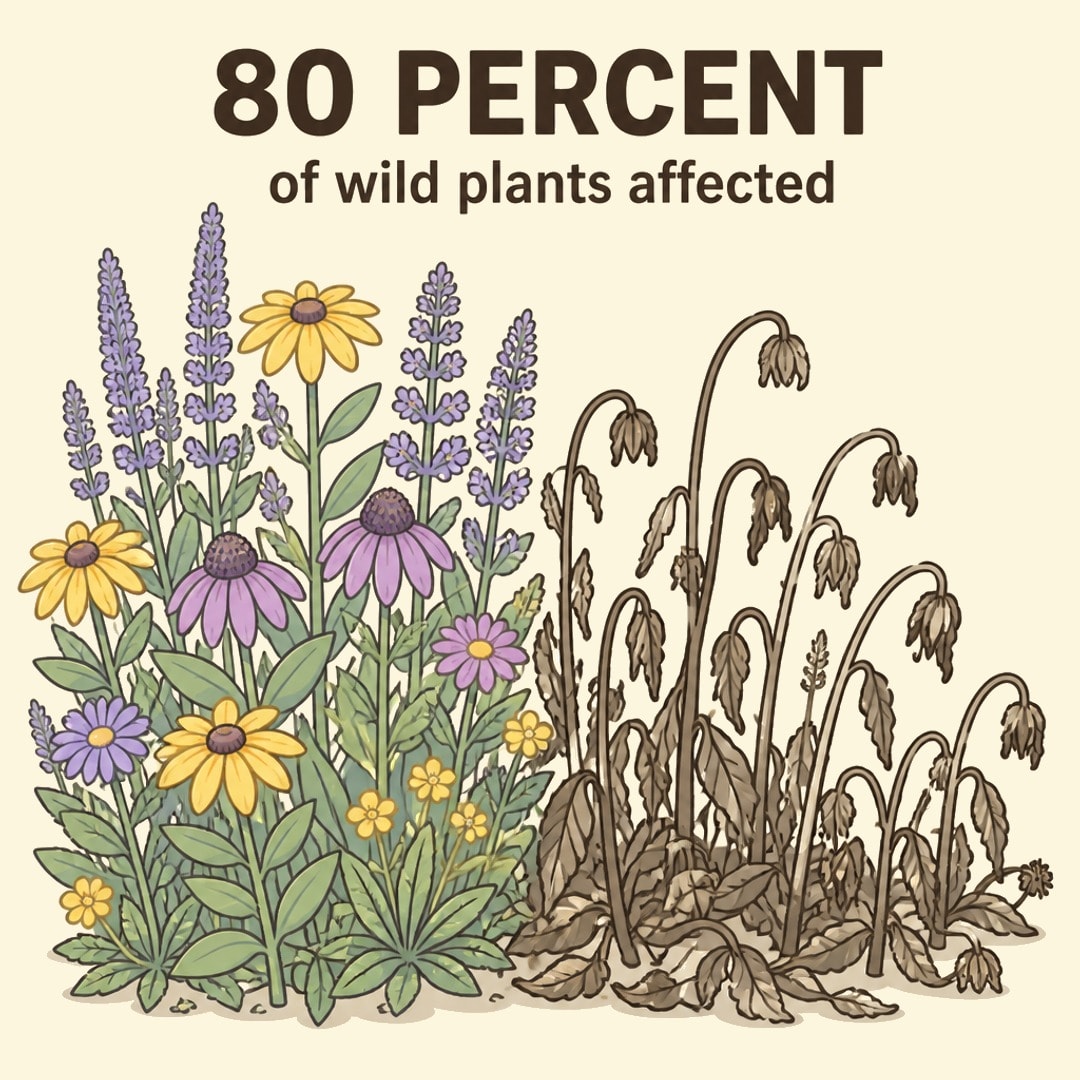
Beyond our farms, the disappearance of bees would trigger an even deeper crisis in the natural world. Over eighty percent of all wild flowering plant species depend on animal pollination, and insects do the vast majority of that heavy lifting. If those insects were suddenly gone, vibrant meadows and wild flowering landscapes would face an immediate pollination bottleneck. Plants that fail to reproduce would simply die off over time, causing the landscape to fade from colorful, living habitats into simplified, sterile ecosystems. Wildflowers form the absolute foundation of these environments, providing shelter, nesting material, and sustenance for countless other living things that share the same habitat.
This loss of plant life sets off a severe domino effect known in science as a trophic cascade, which is a chain reaction where the loss of one species ripples through every level of a food web. Herbivores, which are plant-eating animals like rabbits, deer, and seed-eating birds, would suddenly find themselves without enough food to survive as flowering plants and their resulting seeds disappear. As populations of these herbivores begin to drop due to starvation, the shockwaves travel upward through the ecosystem. Predators like wolves, foxes, and birds of prey that rely on those herbivores for food would also face severe food shortages and population collapse. A single missing insect species can unravel a complex food web that took thousands of years to build, turning rich, biodiverse regions into quiet, empty zones where life struggles to find a foothold.
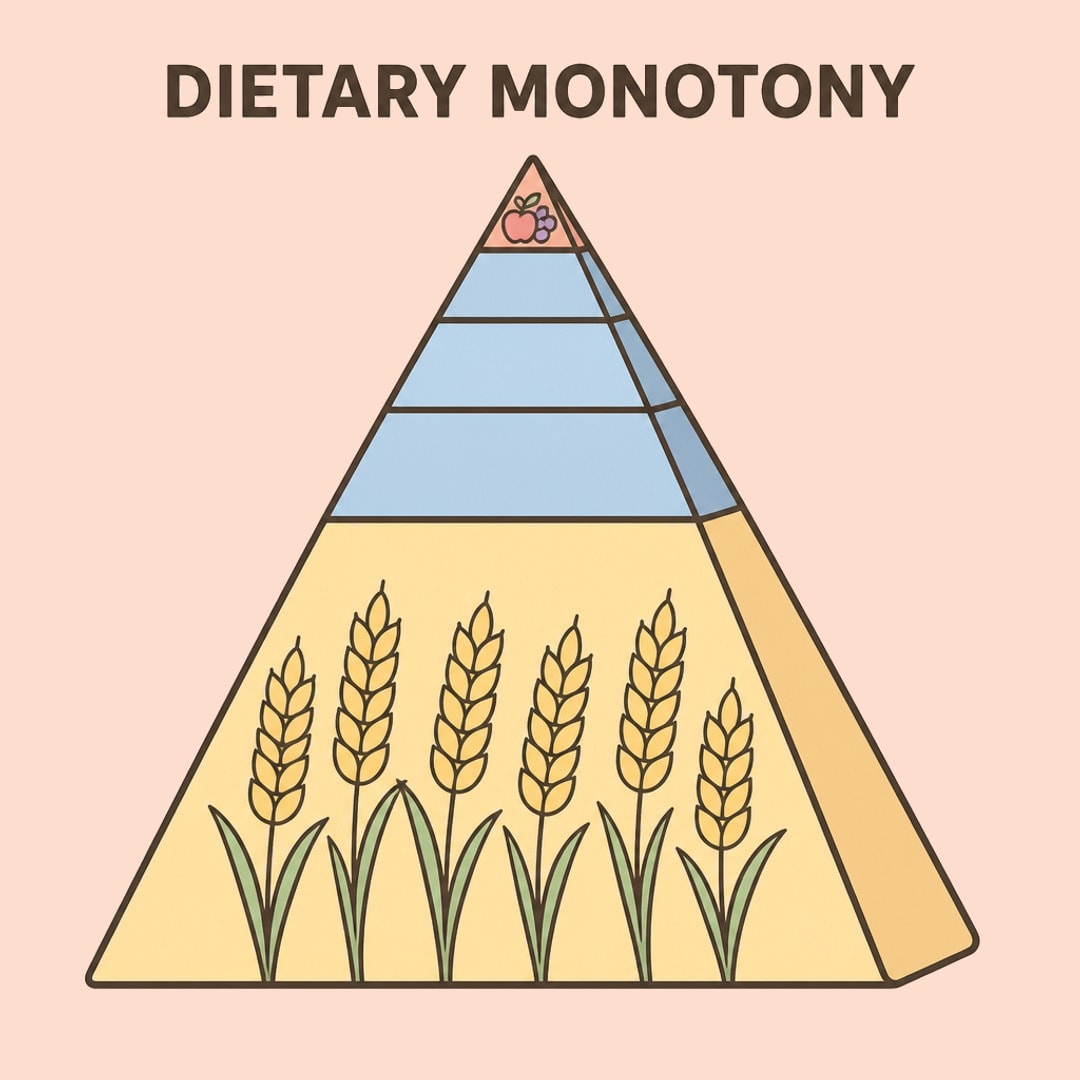
When we look at what would remain on our plates after this agricultural and ecological collapse, the picture of human nutrition becomes stark. Staple grain crops such as corn, rice, and wheat do not need insects because they rely entirely on the wind to scatter their lightweight pollen over vast distances. These grain crops would survive a bee-less world initially, providing enough calories to keep humanity from immediate starvation. However, losing all insect-pollinated crops means losing most fruits, vegetables, and nuts. Humanity would be pushed into a carbohydrate-heavy, nutrient-deficient diet consisting mostly of those wind-pollinated grasses. Without the essential vitamins, antioxidants, and micronutrients usually supplied by bee-pollinated produce, global health would suffer from widespread malnutrition and chronic health issues.
The economic magnitude of this loss is staggering. Crop pollination services provided by insects are estimated to be worth between two hundred and thirty-five billion and five hundred and seventy-seven billion dollars globally each year. Commercial apiculture, which involves beekeepers managing hives and transporting them across the country on trucks to pollinate massive monoculture farms, is already under immense strain. Reported colony losses can exceed fifty percent in some periods due to diseases, pesticides, and habitat loss. If those remaining managed colonies were to disappear entirely alongside wild bee populations, the financial shock to the global agricultural economy would be catastrophic, raising the cost of basic nutrition beyond the reach of millions.

Some might wonder if humans could simply step in to do the work ourselves, using manual labor with small paintbrushes or tiny mechanical drones to move pollen from flower to flower. While scientists and engineers have experimented with artificial pollination in controlled laboratory settings, trying to replace millions of species of insects across global agriculture is economically impossible and logistically out of reach. Hand-pollinating a single orchard requires armies of workers working grueling hours for wages that would make food prices impossibly high, and drones cannot yet navigate the complex microclimate of a dense forest or a sprawling farm field on a massive scale. Our entire global food security system is built on the free, tireless labor of these golden architects. Without them, the delicate balance of nature unravels entirely, leaving us to face a future of profound food scarcity that we are simply not ready to manage.