What If Earth Had Two Moons: Gravity, Tides, and Chaos
Updated 8/4/2026
1 views
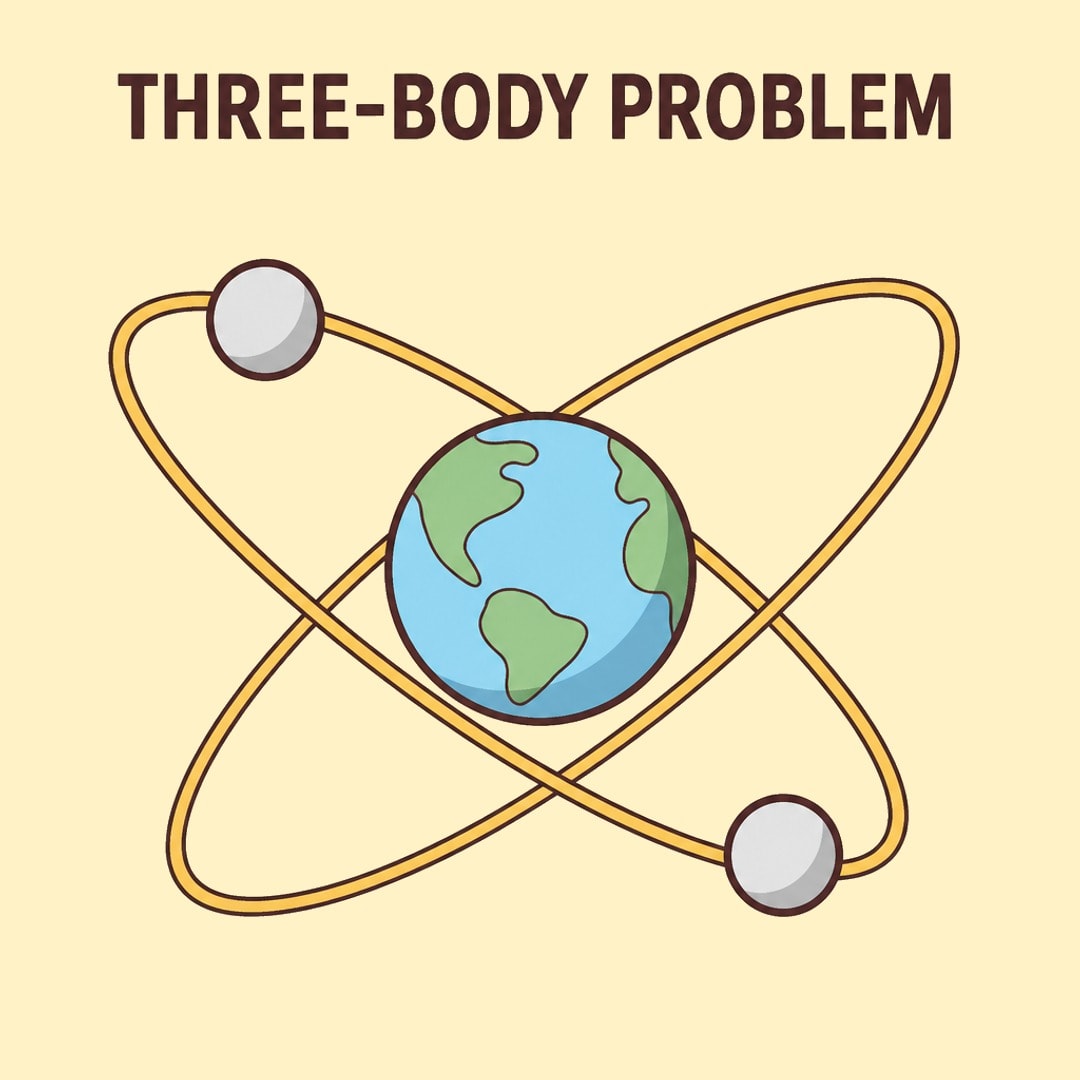
Imagine stepping outside tonight and looking up to see two bright moons hanging in the starry sky. It sounds like a scene straight out of a fantasy novel or an epic science fiction film. But beneath that stunning view lies a hidden engine of invisible forces that would completely change our daily lives. Gravity does not work in simple straight lines where only two objects interact in isolation. When you add another massive body into our immediate neighborhood, our entire planet gets caught in a complex web of pulls and tugs from the Sun, Earth, and both moons all at once. Scientists refer to this kind of interacting system as the three-body problem. In physics, this means predicting the long-term path of everything involved becomes immensely difficult because every single object alters the path of the others through space, and simple closed-form solutions are generally not expected to exist for such tangled movements.
To understand why this matters, we have to look at how gravity operates as a stretching force. Every object with mass pulls on every other object, but the pull is stronger on the side closer to the source and weaker on the far side. In our current system, the Sun and our single Moon both pull on Earth, but the Moon is so close that its local difference in pull creates our familiar tides. Adding a second moon means introducing a brand-new source of differential gravitational pull with its own distinct mass, distance, and speed. Without a single, harmonious orbital configuration, the mathematical equations governing our planet's path and surface environment become fiercely complicated, opening the door to wild instabilities in how forces distribute across our globe.
The most dramatic and immediate change would happen right at the edge of every coastline, where our oceans meet the land. Right now, our single moon creates a steady, predictable rhythm of high and low water every single day. This reliable beat is governed by the gravitational pull of the moon drawing the water toward it as Earth spins underneath. But adding a second moon introduces a second set of tidal forces pulling at our seas from a different angle. Instead of a single predictable rhythm, our oceans would experience two independent forcing frequencies. These are separate waves of gravitational energy crashing against each other in the fluid movement of the water. The water cannot respond to just one master anymore. It has to answer to two different celestial bodies competing for its attention, transforming a peaceful shoreline into a complex hydraulic puzzle.
When we look at the mechanics of fluid dynamics on a multi-moon planet, ocean-basin geometry plays a massive role in how the water responds. The shape of the coastlines and the depth of the sea floors act like tuning forks, resonating with specific frequencies of water movement. When a second moon adds its own gravitational rhythm, those ocean basins would amplify certain tidal frequencies while dampening others through superposition, which is the scientific term for how overlapping waves combine. The result is not a simple double-tide, but a constantly shifting pattern where the height and timing of the water level depend entirely on the changing angles between the Earth, the Sun, and both lunar companions over multiple overlapping timescales.
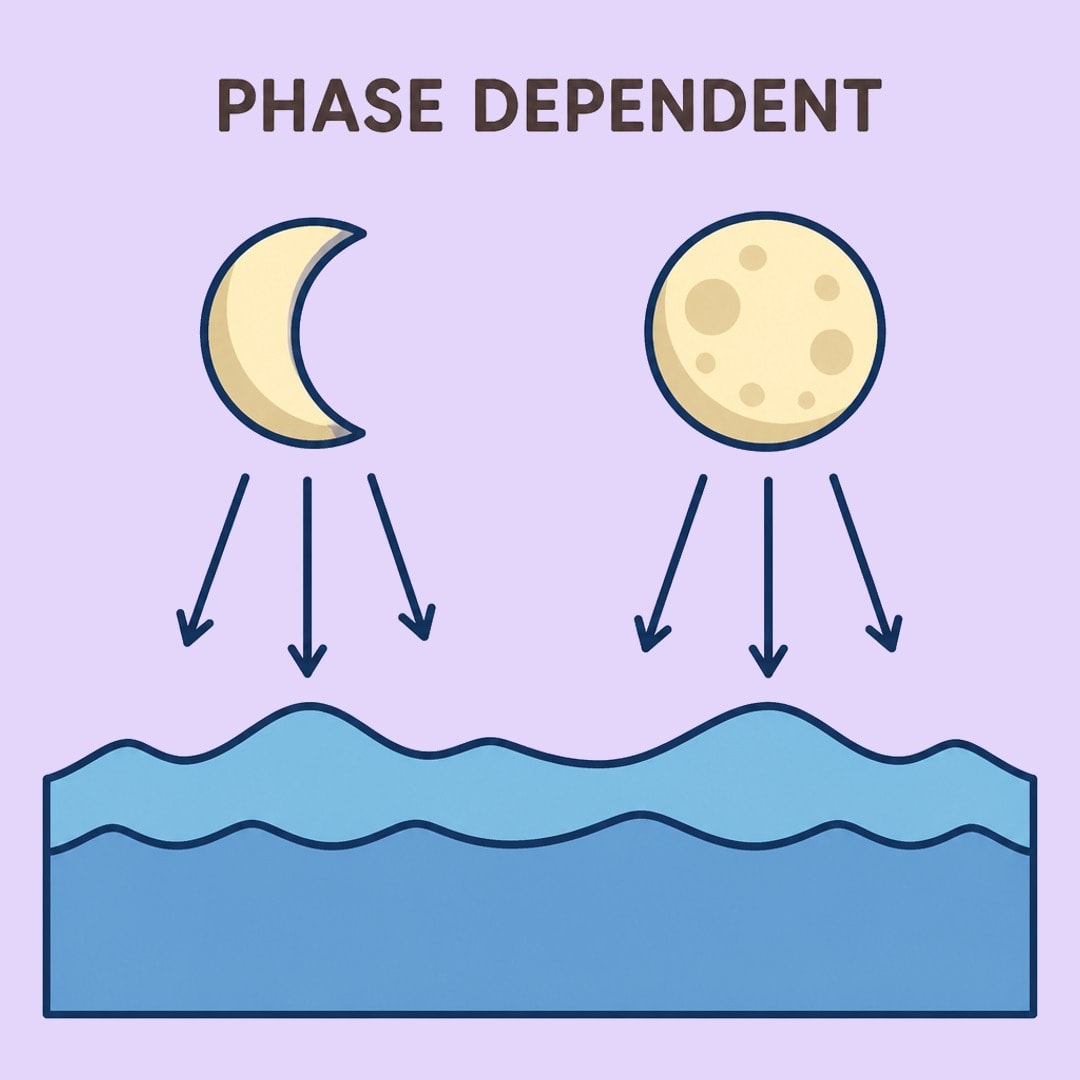
Instead of acting like a steady clock, our tides would turn erratic and unpredictable. There would be special moments when both moons line up with Earth in a geometry known as syzygy, which is a fancy word for a straight-line alignment of three or more celestial bodies. When that happens, their gravitational forces add together to create massive tidal ranges that dwarf anything we see today, behaving much like an extreme version of our current spring tides when the Sun and Moon team up. Coastal areas would see water rushing inland far beyond current limits, threatening low-lying geography. At other times in their orbits, the two moons would pull in opposite directions, canceling out each other's effects through destructive interference and leaving the coastline strangely still and muted, mirroring the weak water changes of neap tides.
The timing of these extreme water levels would shift constantly depending on how the two orbital periods sync up over weeks and months, meaning nobody could rely on traditional tide charts ever again. Because the two moons would travel at different speeds based on their distinct orbital distances, their combined gravitational peaks would drift in and out of phase. You might experience massive, surging coastal floods one week, followed by barely moving water the next, completely rewriting the daily routines of harbor towns, shipping lanes, and coastal infrastructure that rely on dependable water depths.
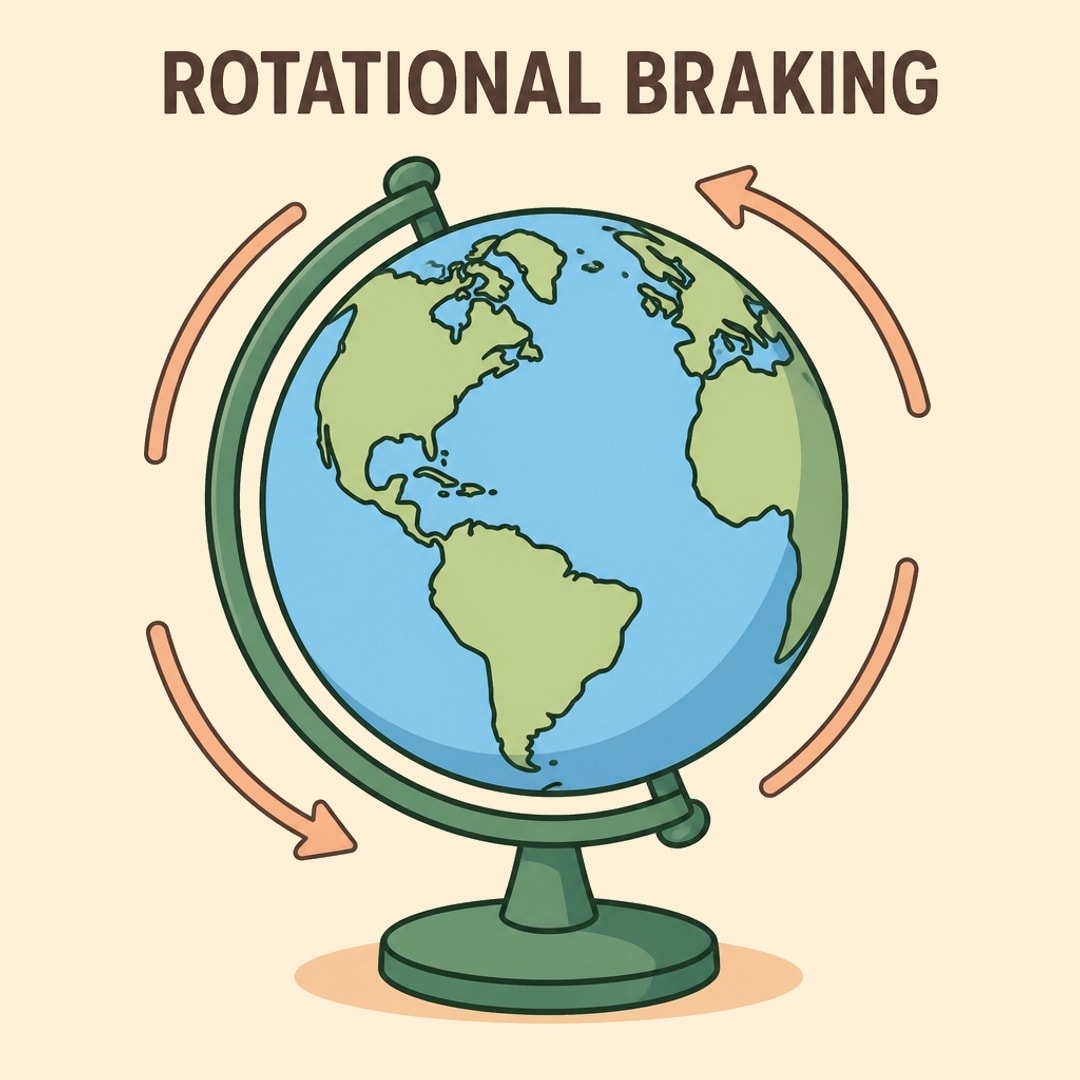
This constant gravitational tug-of-war reaches far beyond the water and touches the very spin of our planet. The friction generated by moving tides acts like a brake on Earth's rotation, slowly stealing energy from our spin and transferring it into lunar orbital motion over vast stretches of time. With two moons pulling at us, this rotational braking effect would shift dramatically, altering how long our days last as angular momentum is constantly redistributed. Over long evolutionary timescales, the length of our day would drift at a different rate compared to the history we actually experienced, changing the fundamental clockwork of our planet.
Furthermore, the presence of an extra moon would influence Earth's axial tilt, which is the angle at which our planet leans as it orbits the Sun. Our current single moon helps keep that tilt stable at about twenty-three and a half degrees, acting like a stabilizing gyroscope that supports relatively stable seasons year after year. A second moon could in principle either strengthen or alter the overall dynamical behavior of this obliquity, depending entirely on the masses and orbital geometry involved. If the configuration tipped the balance toward instability, it could disrupt that delicate balance, potentially throwing our climate into a new and unpredictable rhythm as the planet's tilt wobbled over the centuries.
All of these physical changes would spell profound trouble for living things, especially in the water. Marine plants and animals have spent millions of years evolving behaviors and body clocks tied tightly to the predictable timing of our current tides. Many intertidal species, from barnacles clinging to rocks to fish spawning in shallow estuaries, show behavioral and physiological rhythms linked directly to tidal cycles and lunar-related timing. If the water levels began surging and pausing in chaotic, shifting cycles, those synchronized life-history events would fall apart, leaving organisms mismatched with their environment.
Species that cannot adapt quickly enough to the erratic environment would struggle to survive as their feeding, breeding, and migration cues were scrambled by erratic water movements. Beyond the marine ecosystem, a night sky with two moons would fundamentally change human culture, altering calendars, folklore, and the ancient symbolism we have attached to lunar phases and brightness for millennia. While it might look like a breathtaking masterpiece of the cosmos, a dual-moon setup would rewrite the rules of survival on our planet, binding our daily lives to a far more complex and restless sky.
A dual-moon Earth reminds us just how finely tuned our home planet really is. Every feature we take for granted, from the steady rhythm of the shoreline to the reliable length of our day, is the result of a specific celestial balance.