Why the Sky Is Blue: The Physics of Light, Air, and Vision
Updated 7/31/2026
0 views
Look up on a clear day, and you will see a vast dome of bright blue stretching across the world. It feels like a painted ceiling or the reflection of a giant ocean above us. The truth is stranger and far more active than that. Every second of the day, light from the Sun is colliding with our atmosphere and bouncing in every direction, creating the colors we take for granted. To understand why the sky looks the way it does, we have to follow a beam of white light from the moment it leaves the Sun until it reaches our eyes, examining every obstacle it encounters along the way.
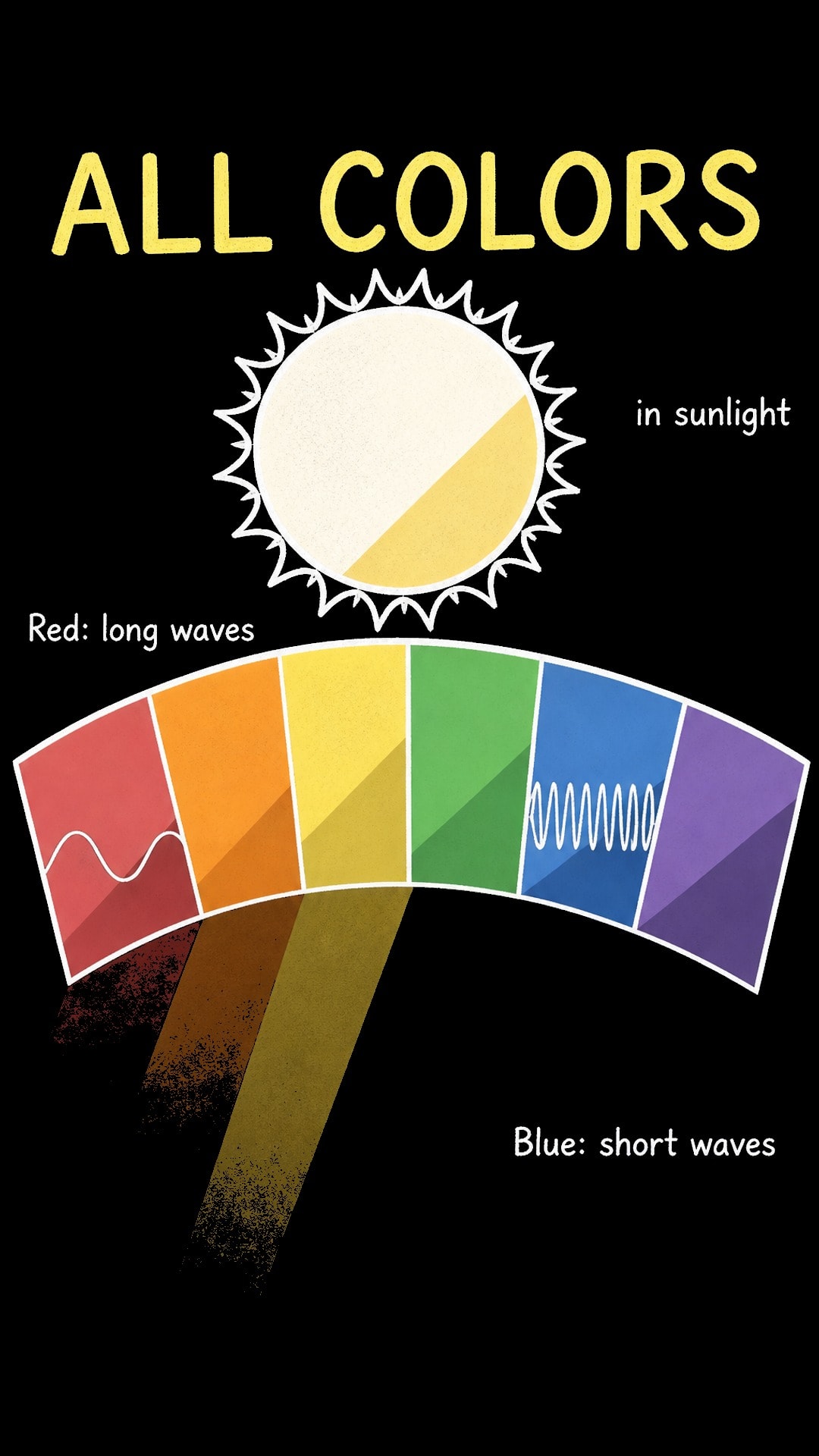
Sunlight looks white and pure to us, but it is actually a clever disguise. It holds every single color of the rainbow mixed together into one beam. These colors travel through space as waves, and each color has a different size, known as a wavelength. Red and orange light travel in long, lazy waves that stretch out over a greater distance. Blue and violet light travel in tight, short bursts that are squeezed close together. Even though they all travel together from the Sun, their different sizes mean they behave very differently once they hit the obstacles on Earth, setting the stage for a grand atmospheric light show.
The Journey Through the Atmosphere
When that beam of sunlight finally reaches Earth, it plunges straight into our atmosphere. The atmosphere is an invisible ocean of gas made mostly of nitrogen and oxygen molecules, along with other trace gases. These gas molecules are extremely tiny, much smaller than the light waves crashing into them. When the short blue and violet waves hit these tiny molecules, they bounce off in every direction like a pinball hitting bumpers. Physicists call this specific bouncing process Rayleigh scattering. Because the blue light gets scattered so easily all over the sky, wherever you look up, you see that scattered blue light shining down at you.
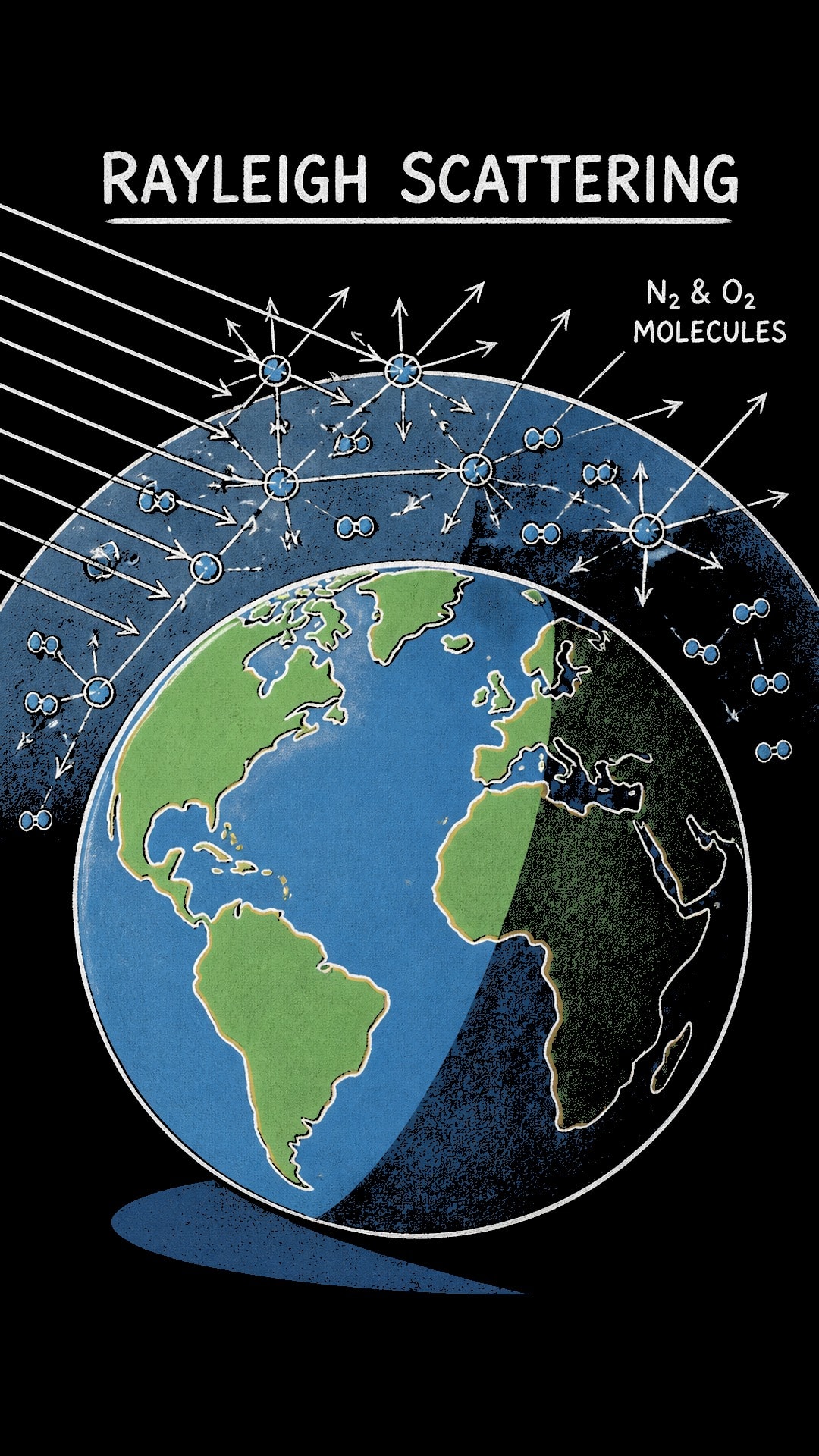
To picture this process clearly, think of how ocean waves interact with different sized rocks near a shoreline. Large waves roll right past small pebbles without changing direction much, while tiny ripples bounce off everything in their path. Sunlight works in a very similar way. The long red waves pass right through the tiny gas molecules in the air without noticing them. Meanwhile, the short blue waves crash into the nitrogen and oxygen molecules and scatter outward in every single direction. This constant outward bouncing is what turns the entire sky into a glowing dome of blue light rather than just leaving a bright white spot where the Sun sits.
The Mystery of the Missing Violet Sky
This raises a puzzle for anyone looking closely at the light spectrum. Violet light has an even shorter wavelength than blue light, which means it scatters even more strongly when it hits air molecules. If violet light bounces around with even greater energy, why is the sky not purple instead of blue? The answer comes down to two simple facts about our Sun and our bodies. First, the Sun simply emits a much larger amount of blue light than it does violet light. Second, human eyes are built with special cells called photoreceptors that are far more sensitive to blue tones than they are to violet tones. So even if some violet light is scattered up there, our eyes simply ignore it and tune in to the overwhelming wash of blue.
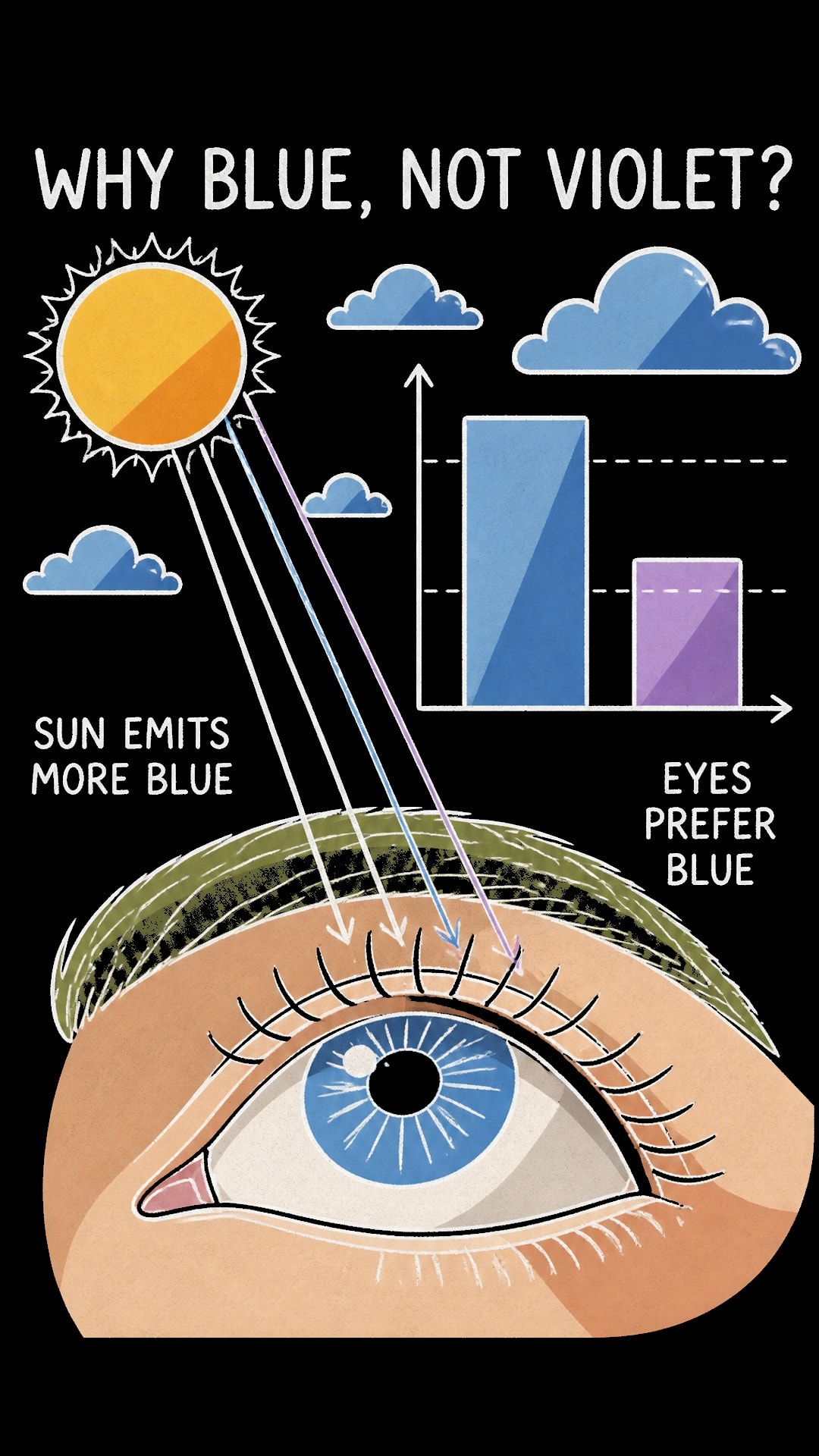
Think about how a sound system works when you turn up the bass while turning down the treble. Even if high-pitched sounds are present in the room, your ears pick up the deeper, louder tones much more clearly. A similar balance happens in our eyes when looking at the sky. Our visual system combines the signals from our color-detecting cells and decides that blue is the dominant color reaching us from above. Because the Sun produces more blue photons than violet photons, and because our biological hardware is tuned to notice blue more readily, the violet light gets drowned out in our daily experience of the world.
The Long Road at Sunset
-The daily routine of the sky changes completely when the Earth rotates and the Sun sinks low. At sunrise or sunset, the Sun sits right down on the horizon, far off to the side rather than straight overhead. This means the light coming toward your eyes has to travel through a much thicker slice of the atmosphere. Instead of taking a short cut straight down, the light must carve a long, exhausting path through miles and miles of heavy air before it reaches you.
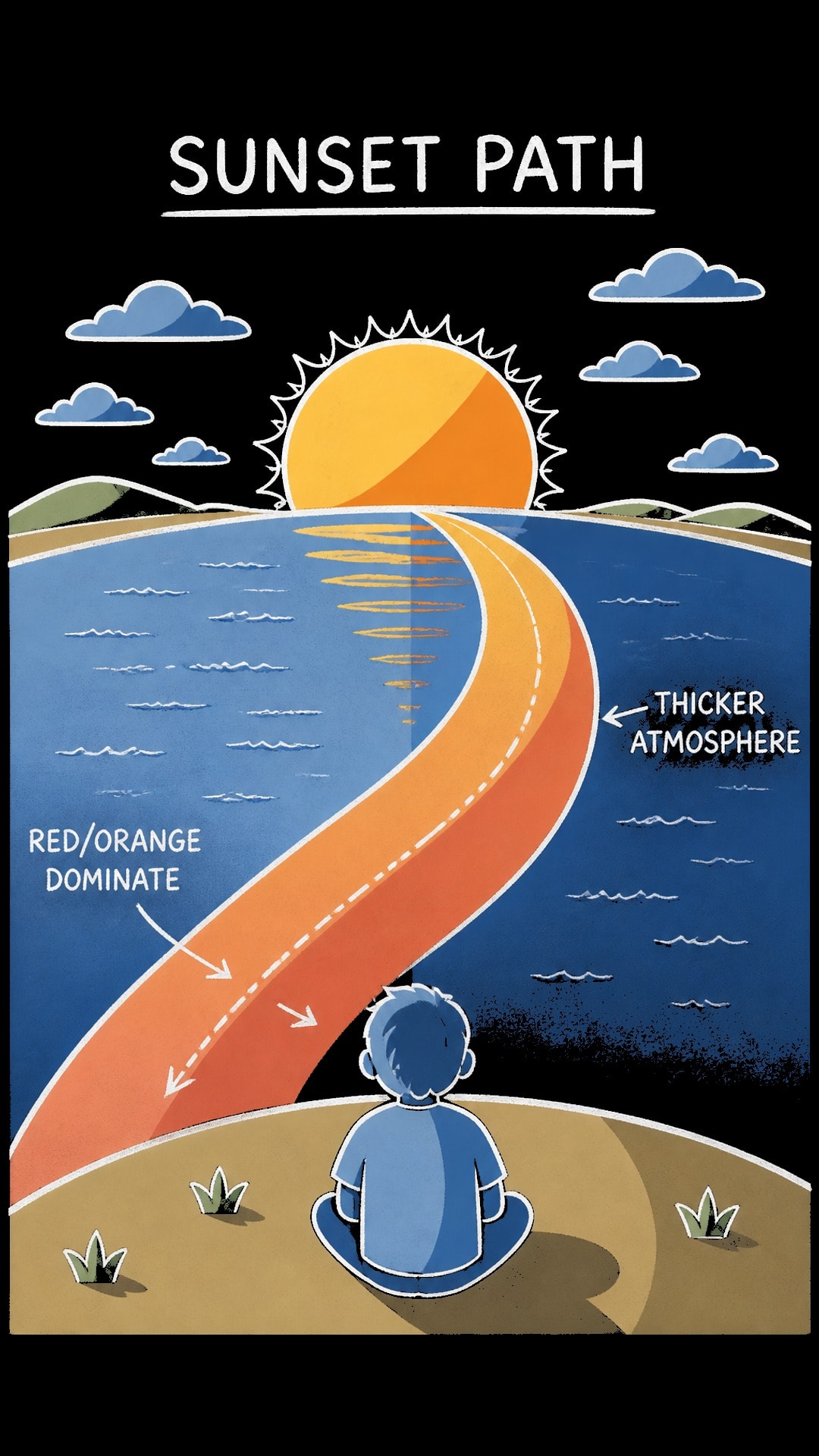
To understand why this changes the color, imagine shining a flashlight through a long tunnel filled with smoke versus a short box of smoke. In the short box, the light barely notices the smoke particles. In the long tunnel, the light has to fight through obstacle after obstacle. When the Sun is low on the horizon, its light is forced to take the long tunnel through the atmosphere. The air molecules scatter the short blue waves away from your line of sight long before the beam ever reaches your eyes. The blue light gets stripped away and sent off in other directions, leaving behind only the light that can push through the gauntlet.
The Colors That Survive
Along this extended journey through the thick air, most of the short-wave blue and violet light gets scattered away in completely different directions long before it ever reaches your eyes. It gets filtered out of the beam entirely. What manages to survive the long journey are the long-wave colors like red, orange, and yellow. These stubborn waves are too big to be scattered away easily by the gas molecules, so they punch right through the thick air near the horizon, creating those warm, fiery twilight colors we love to photograph.
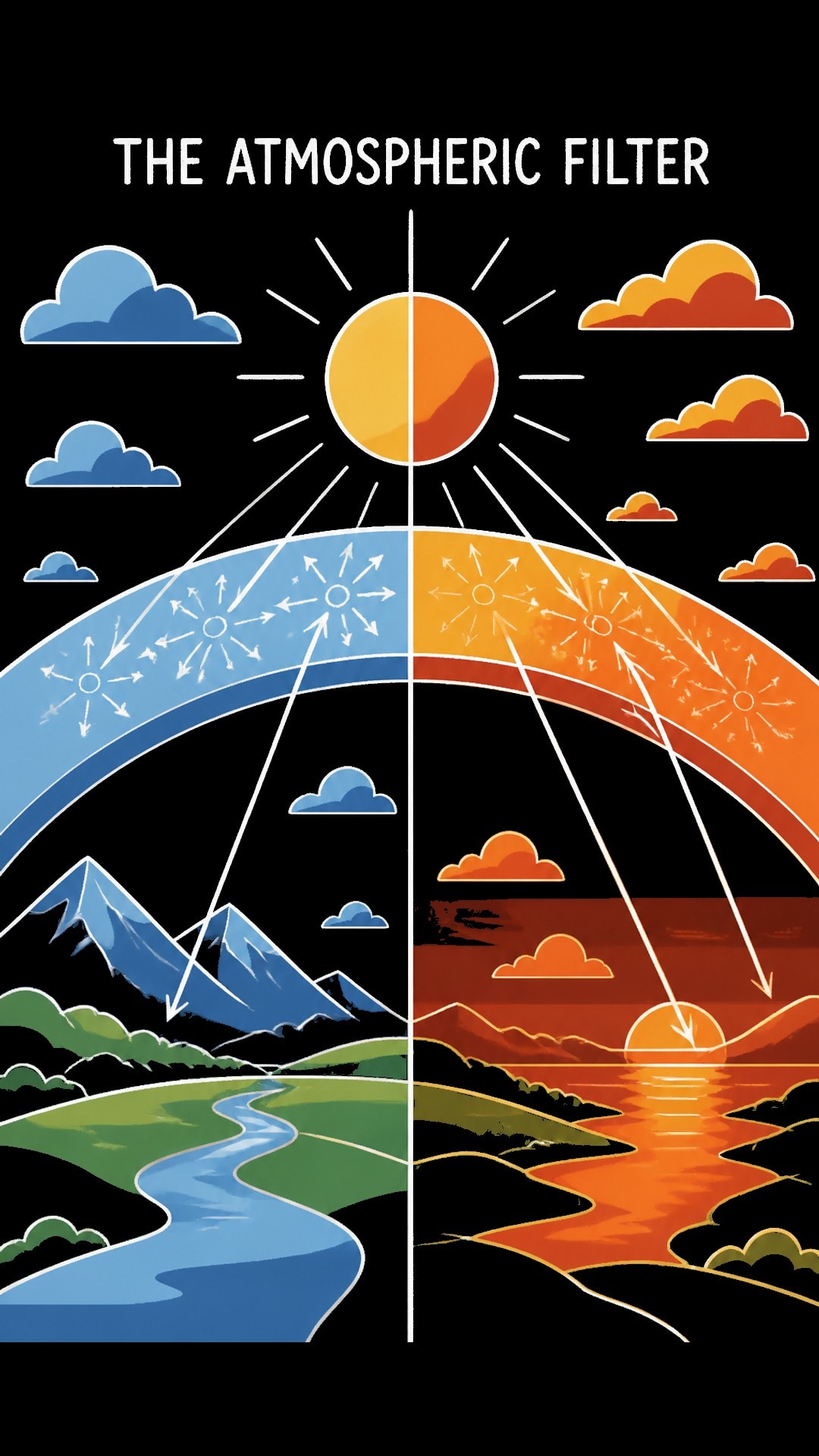
When you watch a brilliant sunset fade into night or gaze up at a bright afternoon canopy, you are watching a grand filtering system at work. The sky is not actually a colored object hanging in space. It is the visible result of light waves colliding with gas molecules, bouncing around, and getting sorted out by size over miles of air. You are essentially looking at whatever colors managed to survive a long, chaotic journey through our atmosphere.
When you step outside tomorrow and look up at the daytime blue or watch the evening horizon burn with amber light, you are seeing physics in action. Every shade is a direct record of how light interacts with the invisible gases that keep our planet alive.