Why a Woodpecker’s Head Works Like a Hammer, Not a Helmet
Updated 7/29/2026
1 views
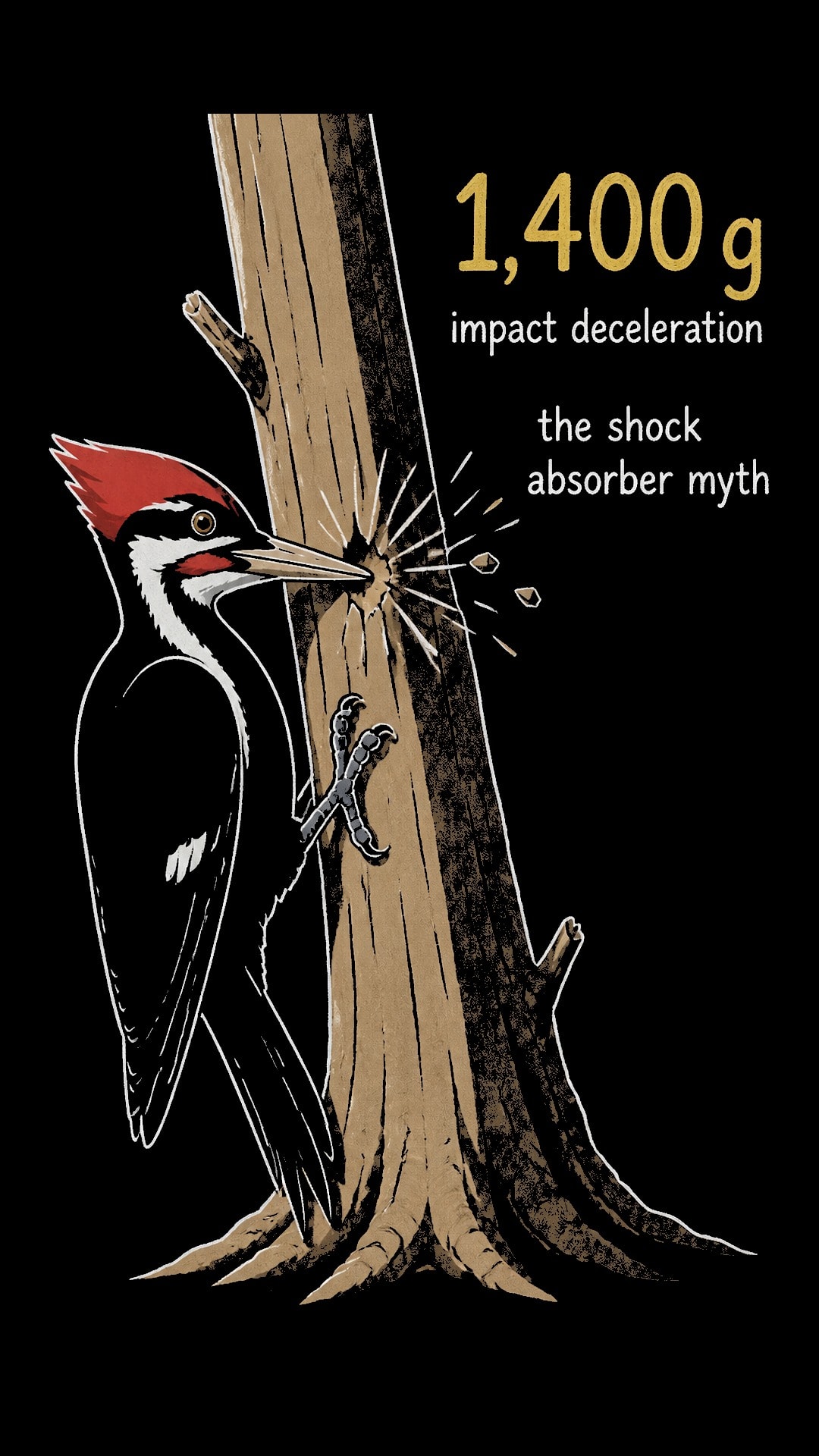
When a woodpecker begins its rapid-fire drumming against a tree, the physical forces involved are staggering. Each time the bird strikes the wood, its head undergoes a sudden change in speed that results in an impact force reaching over one thousand times the force of gravity. To put that in perspective, humans generally suffer traumatic brain injuries when experiencing forces just a tiny fraction of that amount. For decades, it was a common scientific assumption that these birds must possess some form of biological padding—a built-in shock absorber—to protect their brains from the violent impacts that occur during every foraging session or communication signal.
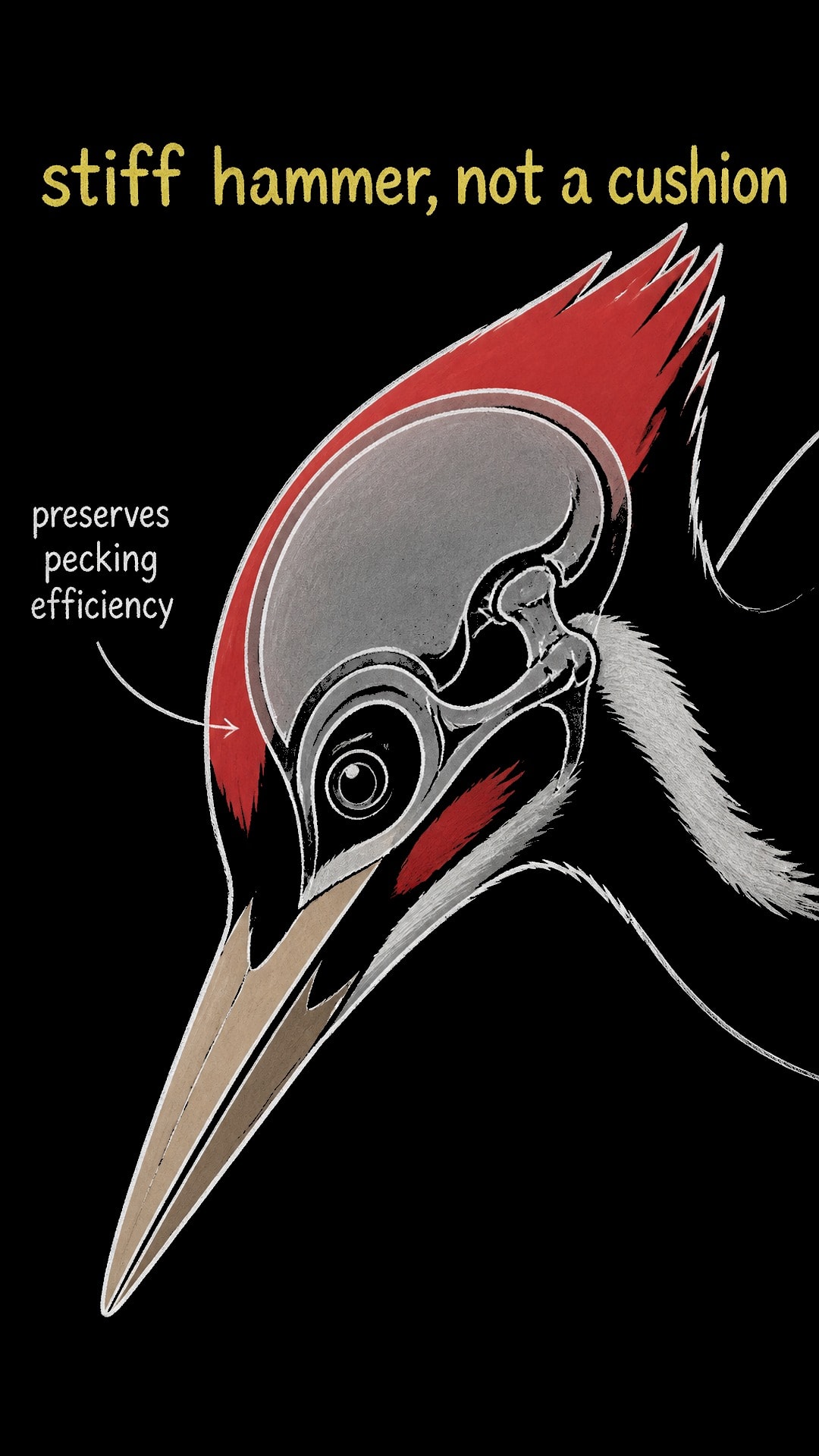
Recent scientific investigations have completely flipped this traditional view on its head. Researchers found that the idea of a built-in cushion or spring-like mechanism is not just inaccurate; it is actually physically impossible for the task the bird needs to accomplish. If a woodpecker’s skull acted as a shock absorber, it would dampen the force of the strike, meaning the bird would lose the very momentum required to penetrate the tough surface of a tree. Instead of being a springy, flexible structure designed to absorb energy, the woodpecker’s skull behaves like a stiff, solid hammer. By keeping the beak and the skull acting as one rigid unit, the bird ensures that every single bit of its energy is directed exactly where it needs to go: into the wood.
This shift in understanding emphasizes that efficiency is the primary driver of the bird’s anatomy. If the bird’s skull were to flex or compress upon impact, it would act as a buffer that slows down the peak force of the strike, requiring the woodpecker to work significantly harder to achieve the same result. By maintaining a rigid system, the woodpecker ensures that its pecking remains sharp and effective. The brain does not need a cushion because the body has evolved a different strategy for managing the intense mechanical demands of its lifestyle.
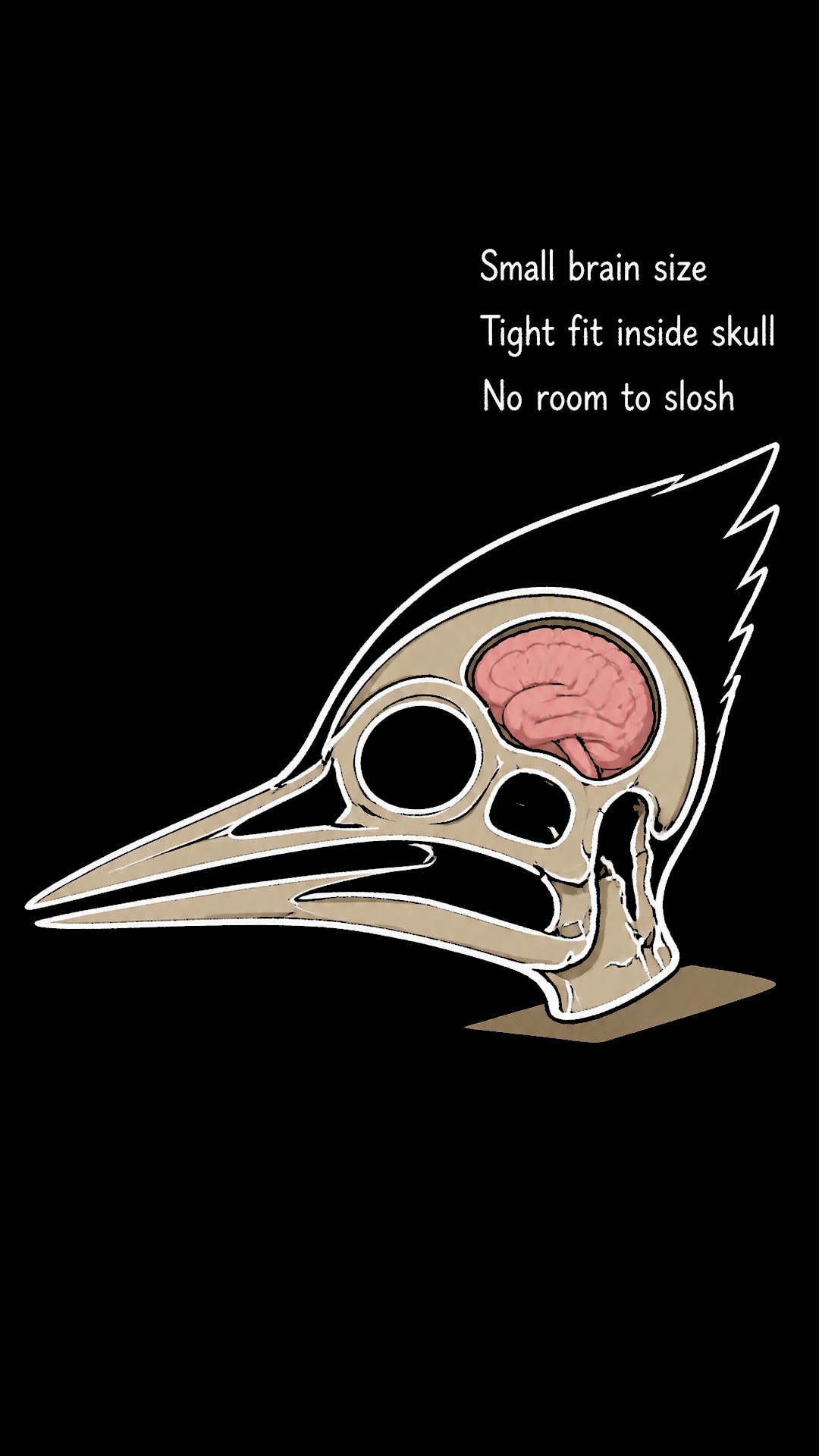
So how exactly does the brain survive these massive hits without being rattled or bruised? The answer lies in the geometry of the skull and the specific size of the brain itself. A woodpecker’s brain is quite small compared to the size of its head. Because it is small and fits extremely snugly within the cranial cavity, there is almost no empty space left inside for the brain to move around. In human brains, one of the primary causes of injury during a collision is the brain moving, or sloshing, within the skull, which causes it to strike the inner walls of the bone. When you minimize the space, you minimize the movement. Because the woodpecker’s brain fits so perfectly, it remains stable even when the head comes to a dead stop in a fraction of a second.
This lack of internal movement is a key factor in why the bird avoids the concussions that might affect larger animals. Because the brain is essentially locked in place by its own proportions, it does not experience the secondary impact against the bone that usually triggers a brain injury. The skull acts as a tight, protective container that keeps the soft tissue inside from shifting, effectively protecting the brain from the forces that occur during the high-speed deceleration of the beak. It is a lesson in how physical dimensions often dictate biological limits.
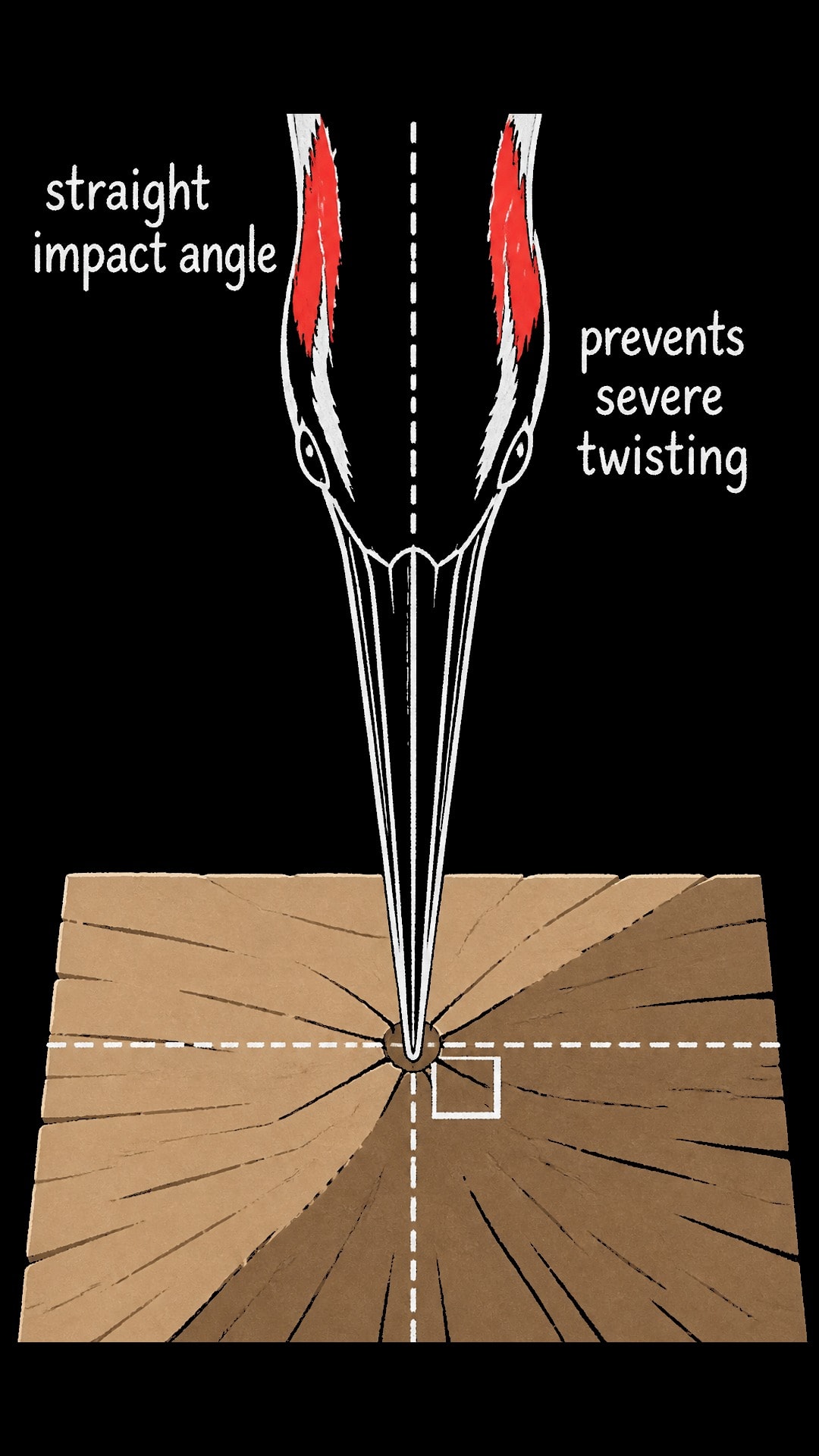
Another vital piece of the puzzle is the direction of the strikes. When a woodpecker drums, it moves its head in a very precise, straight line that is almost perpendicular to the tree surface. This linear motion is incredibly important because it avoids rotation. Rotational forces, where the head is whipped to the side or twisted, are the leading causes of the most severe types of brain concussions. By staying on a perfectly straight path, the woodpecker eliminates these dangerous twisting forces entirely. The motion is controlled and predictable, keeping the brain aligned with the impact rather than shaking it side to side.
This precise alignment ensures that the force travels in a straight line through the bone, bypassing the delicate structures that would be susceptible to tearing or twisting damage. It is a testament to the accuracy of the bird’s musculature and skeletal alignment that it can repeat this motion thousands of times a day without drifting off course. Every movement is calculated to reduce the risk of injury, ensuring the bird can continue to feed and communicate safely despite the intensity of the physical action involved.
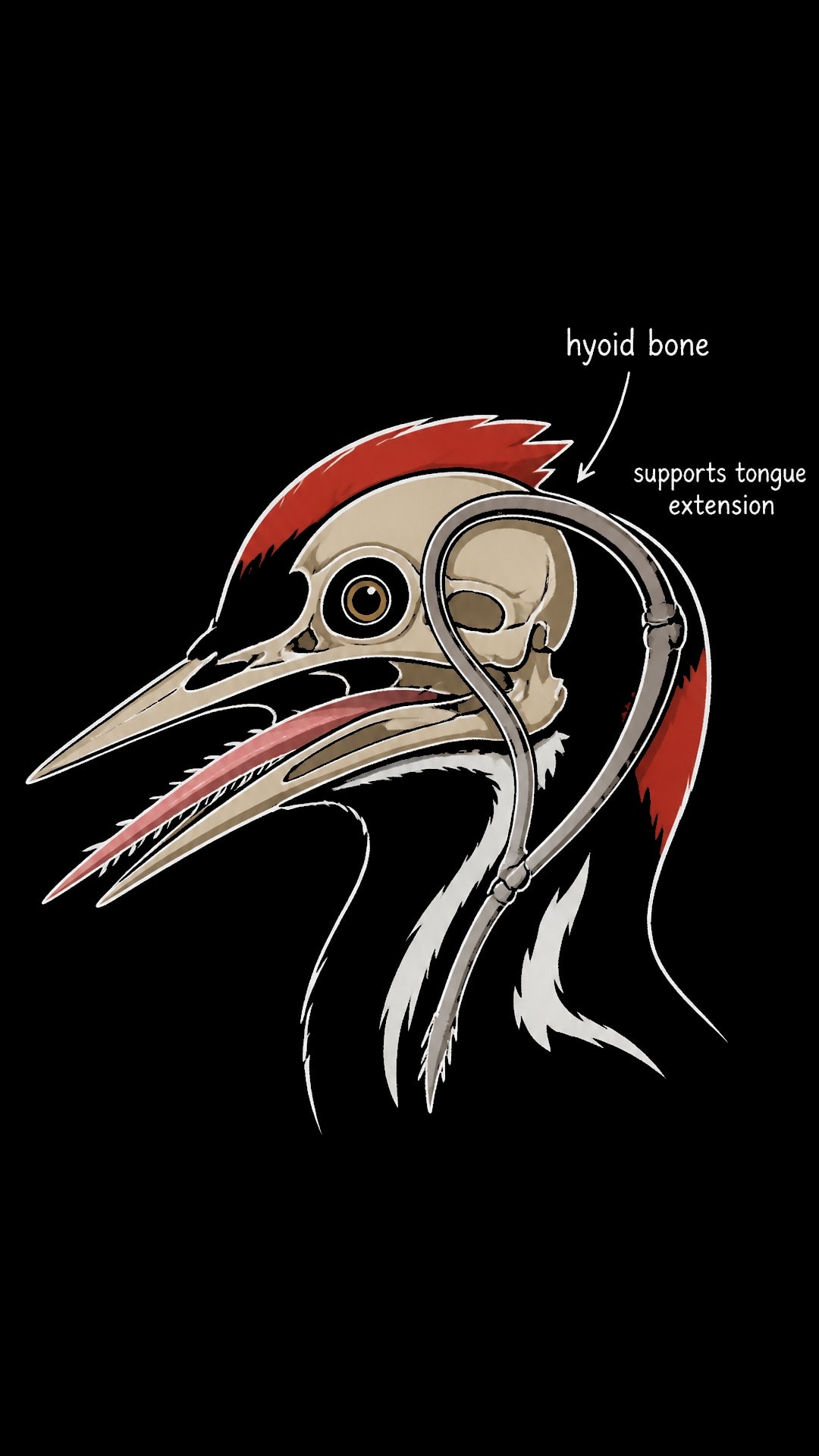
Many discussions about woodpecker safety often point to the hyoid apparatus, a long bone that supports the tongue and allows it to extend far beyond the beak. For a long time, the common story was that this bone acts like a seatbelt, wrapping around the entire skull to provide a structural brace for the brain. However, further research has clarified that this is not its primary function. While the bone is indeed long and reaches around the back of the skull, its main purpose is to support the tongue muscles and allow the bird to reach deep into crevices for food. It is essentially an extension tool rather than a piece of personal protective equipment.
Treating the hyoid bone as a seatbelt was a fascinating theory, but it does not align with the reality of how the skull functions as a rigid hammer. The bone is a tool for foraging, not a secondary shock-absorbing system. By moving past the idea of the seatbelt, scientists have gained a clearer picture of how the bird is built. The brain protection comes from the simple, yet effective, combination of tight spatial fit and straight-line strikes, rather than relying on an elaborate secondary skeleton wrapping around the brain.
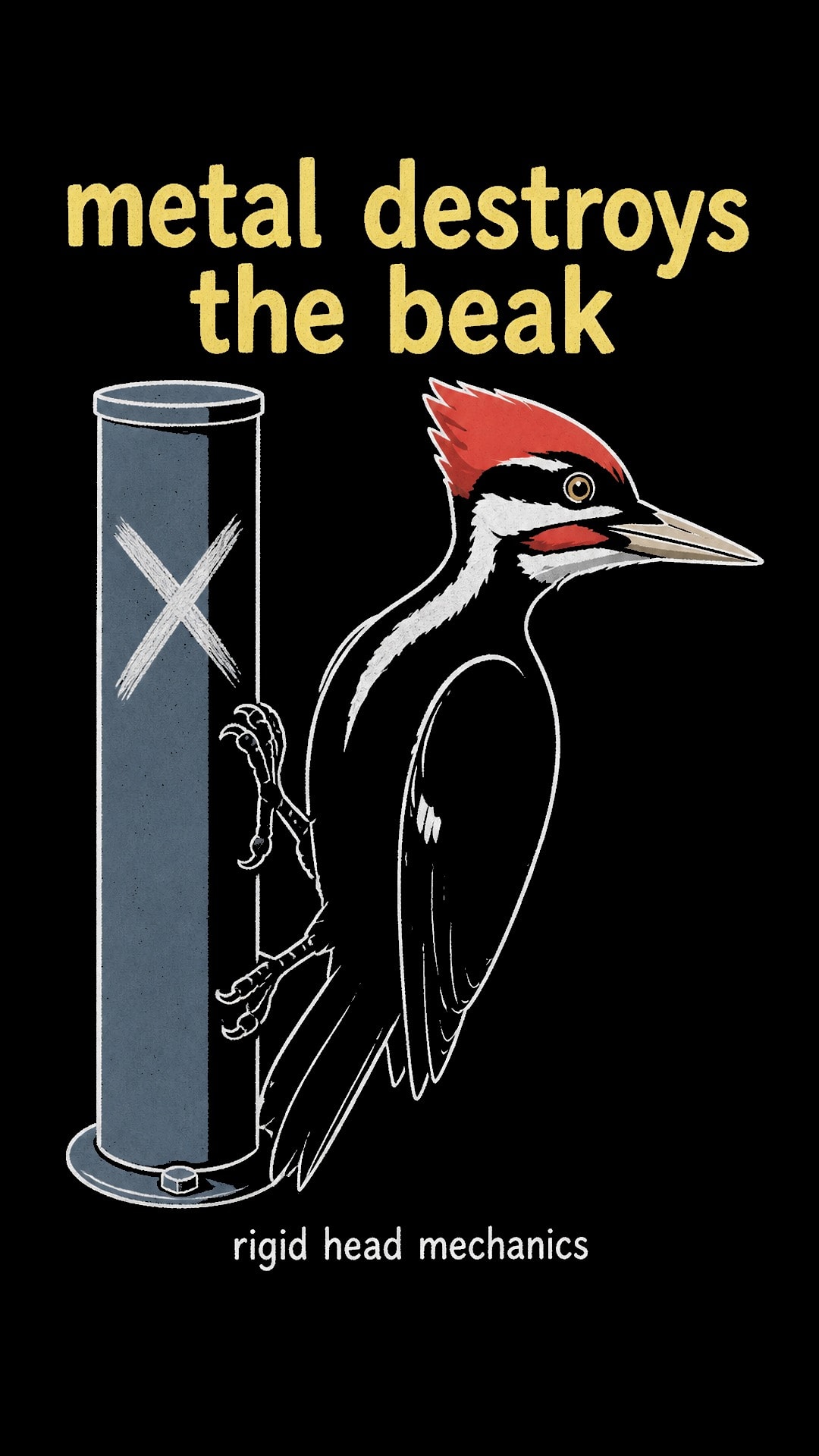
Finally, it is important to address a common misconception that has been bolstered by cartoons and pop culture: the idea of the metal-drumming woodpecker. In reality, real woodpeckers strictly avoid drumming on metal. Metal is not only damaging to their specialized, chisel-like beaks, but it also lacks the acoustic and physical properties that the birds need to communicate or find food. Woodpeckers are finely tuned to the vibration patterns of wood. Metal, being far too dense and unforgiving, would destroy a woodpecker’s beak upon contact and provide no benefit to the bird. When they drum, they do so on trees that have the right density to help them thrive.
Instead of needing a helmet, the woodpecker has mastered the physics of its environment. It has evolved to be a rigid, efficient tool-user whose survival depends not on complex cushions, but on the simple, smart arrangement of its own anatomy. By understanding how the skull works as a single unit, we see a much more elegant solution to a dangerous problem. The woodpecker survives because it has turned its head into a hammer, and it keeps that hammer perfectly aligned to the task at hand.