The Wombat's Geometric Secret: Why They Produce Cube-Shaped Droppings
Updated 7/29/2026
2 views
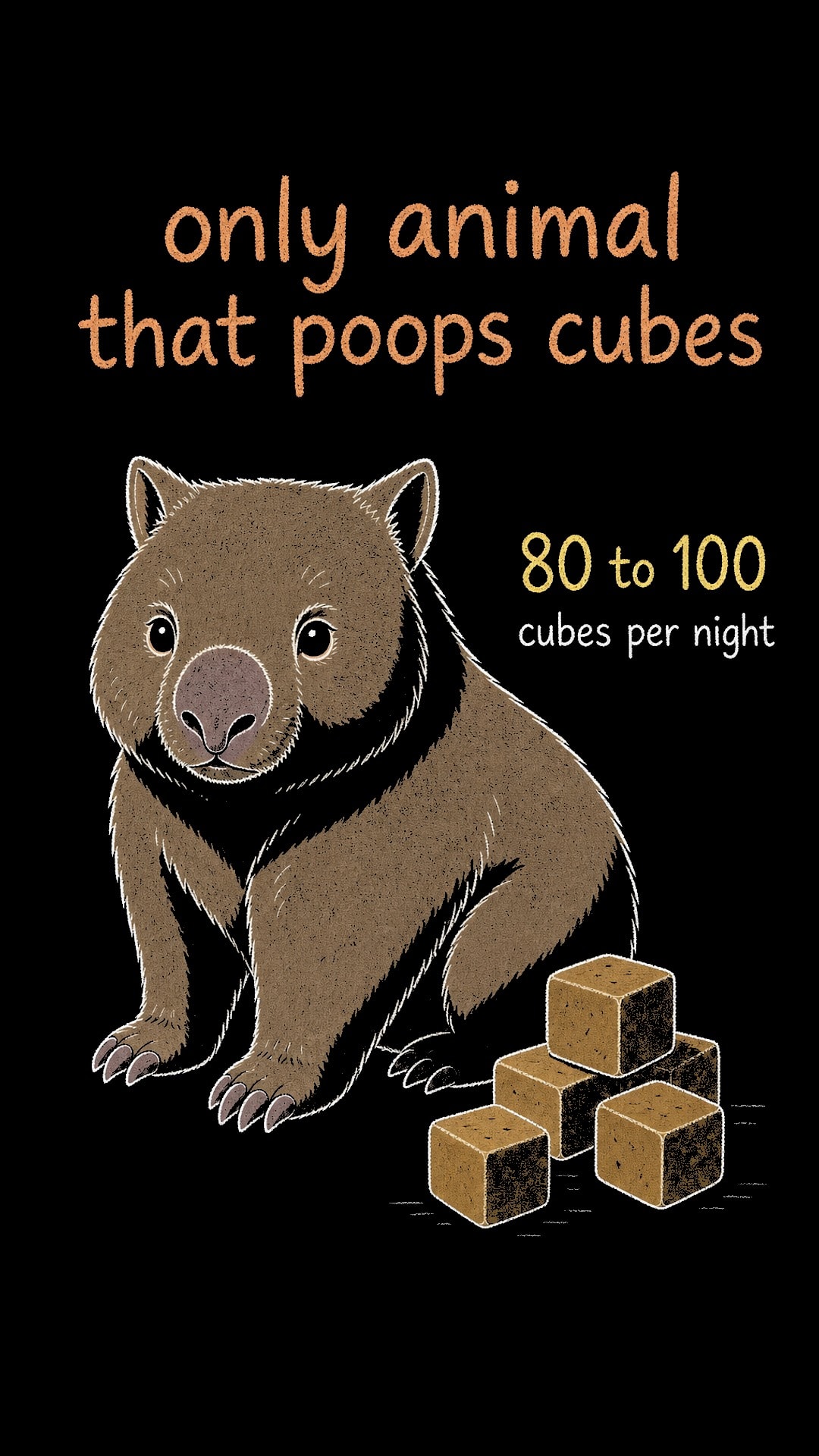
The bare-nosed wombat, an Australian marsupial that looks much like a furry, heavy boulder, holds a record in the animal kingdom that is truly bizarre. Among all the creatures on Earth, the wombat is the only one known to produce feces in the shape of a cube. While this might sound like a simple curiosity, it is the result of a highly specialized biological process. Every single night, a healthy wombat can drop between eighty and one hundred of these precise, block-like pellets. This constant production serves a critical function in the life of a solitary animal that spends its time roaming the Australian bush in the darkness of night.
The Logic Behind the Shape
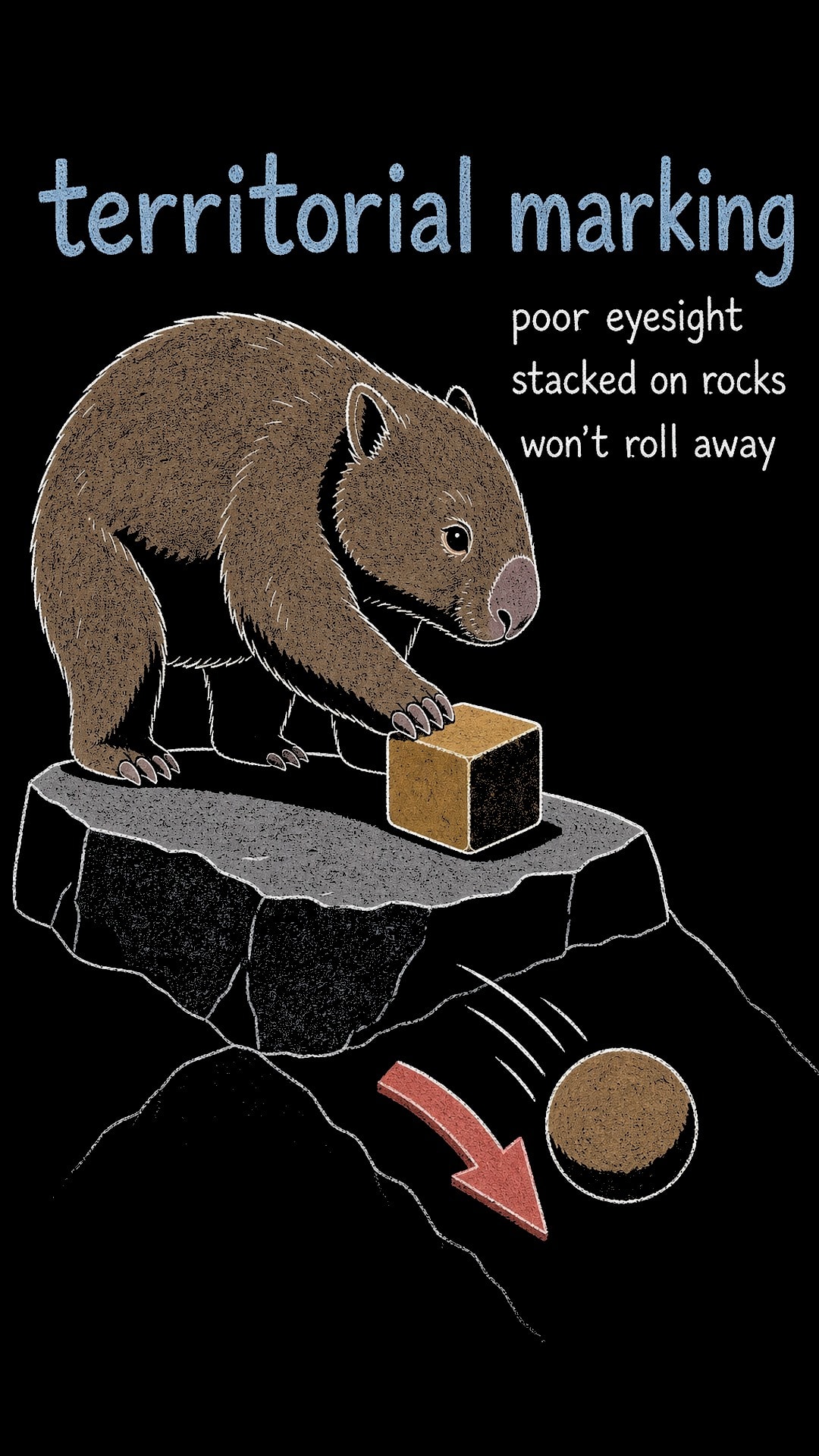
Wombats are solitary, meaning they live alone, and they possess quite poor eyesight. To survive and interact with their neighbors, they rely on a complex system of communication through scent and markings. They leave their waste on prominent features in their environment, such as large rocks, fallen logs, or even steps in the landscape. These high spots act as natural bulletin boards for other wombats in the area to find and inspect.
If these droppings were round, they would easily roll off the uneven surfaces of a rock or a log. A round object has no flat sides to keep it stable, meaning a message left by one wombat could be lost to the ground in an instant. By producing a cube, the wombat ensures that its waste stays exactly where it was placed. The flat surfaces allow the droppings to stack on top of one another securely, creating a stable pile that remains visible to others. This geometric trick ensures that the wombat's calling card is not easily dislodged by wind or a slight bump, keeping their territorial lines clear and effective.
Dispelling the Anatomical Myth
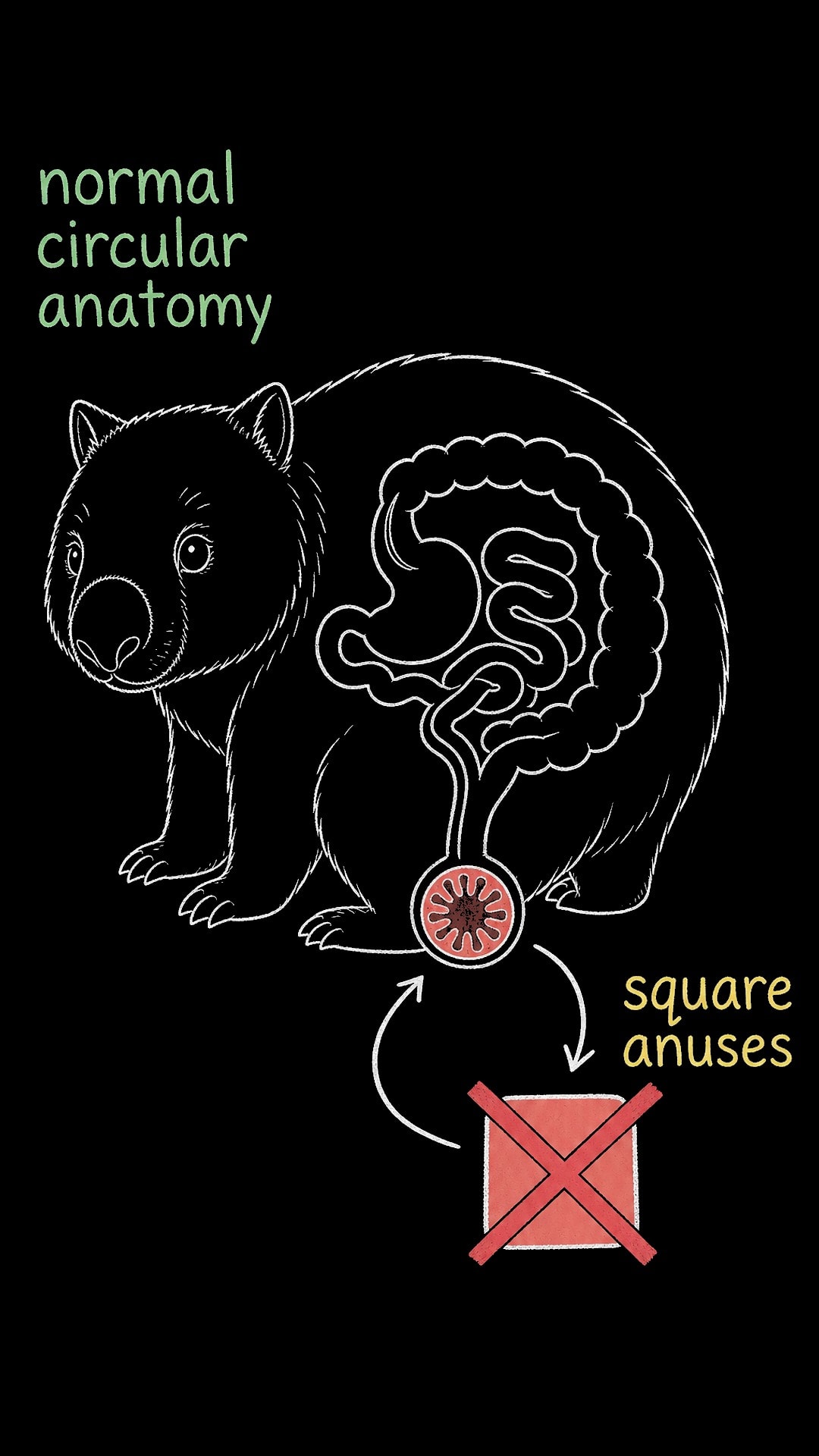
Because the final result is a perfect little block with sharp corners and flat sides, many people have long joked that the wombat must possess a square-shaped anus. It is an intuitive assumption to make—if you push a shape through an opening, you might think the opening must match the shape. However, this is a complete myth. A wombat's anatomy is entirely normal and matches that of other mammals.
Like most other four-legged creatures, the wombat has a standard circular sphincter, which is the ring-shaped muscle that controls the exit of waste from the body. There is nothing about the external anatomy of the animal that suggests it can create geometry. The actual magic happens much deeper inside the digestive system, far away from the exit. The process relies entirely on the internal structure of the intestines, proving that biology can create complex shapes without needing to have a matching outlet.
The Intestinal Mold
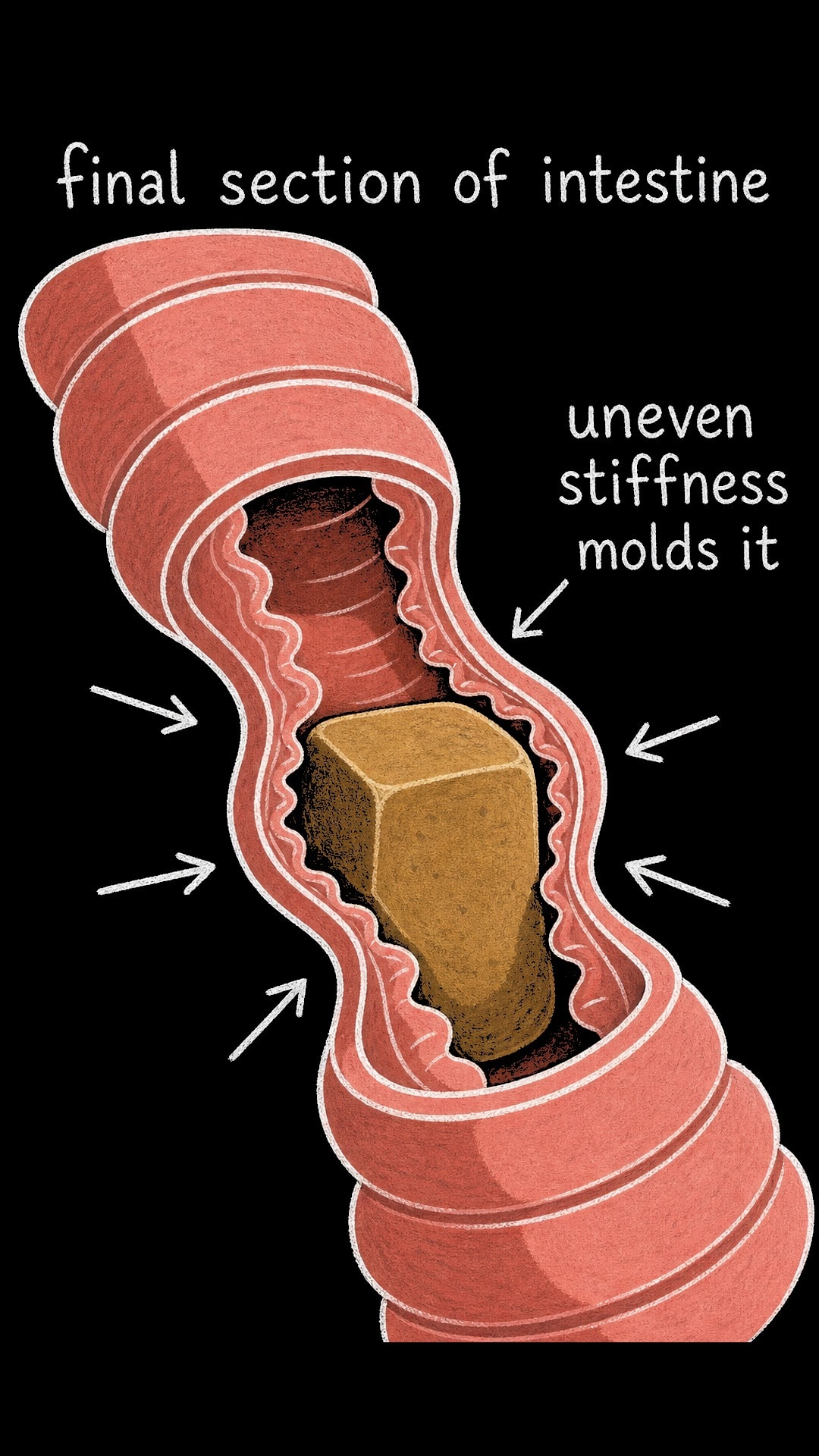
The transformation begins in the final section of the wombat's long intestine. Specifically, it happens within the last seventeen percent of the gut's total length. In most animals, the intestine is a relatively uniform tube that pushes waste along at a steady pace. In the wombat, however, the structure of the intestinal wall is fundamentally different.
This final section of the intestine is not an even tube at all. It features alternating regions of varying thickness. Some bands of tissue are very thick and stiff, while others are significantly more flexible and thin. As the intestine performs its regular, rhythmic contractions—the wave-like motions that push digestion forward—the waste is squeezed against these uneven walls. Because the gut wall is not uniform, it acts like a mold. The stiffer sections exert more pressure on the waste than the flexible ones, forcing the material into the distinct, sharp-edged shape that eventually leaves the body. The combination of these specific, non-uniform contractions and the varying stiffness of the tissue is what carves the waste into a cube.
Drying for Definition
The shaping process is heavily aided by the way the wombat's body manages water. As the waste moves through the final sections of the intestines, the gut wall works to absorb water from the mixture. This is a common biological process in many animals to keep the body hydrated, but in the wombat, it serves a secondary purpose of solidification.
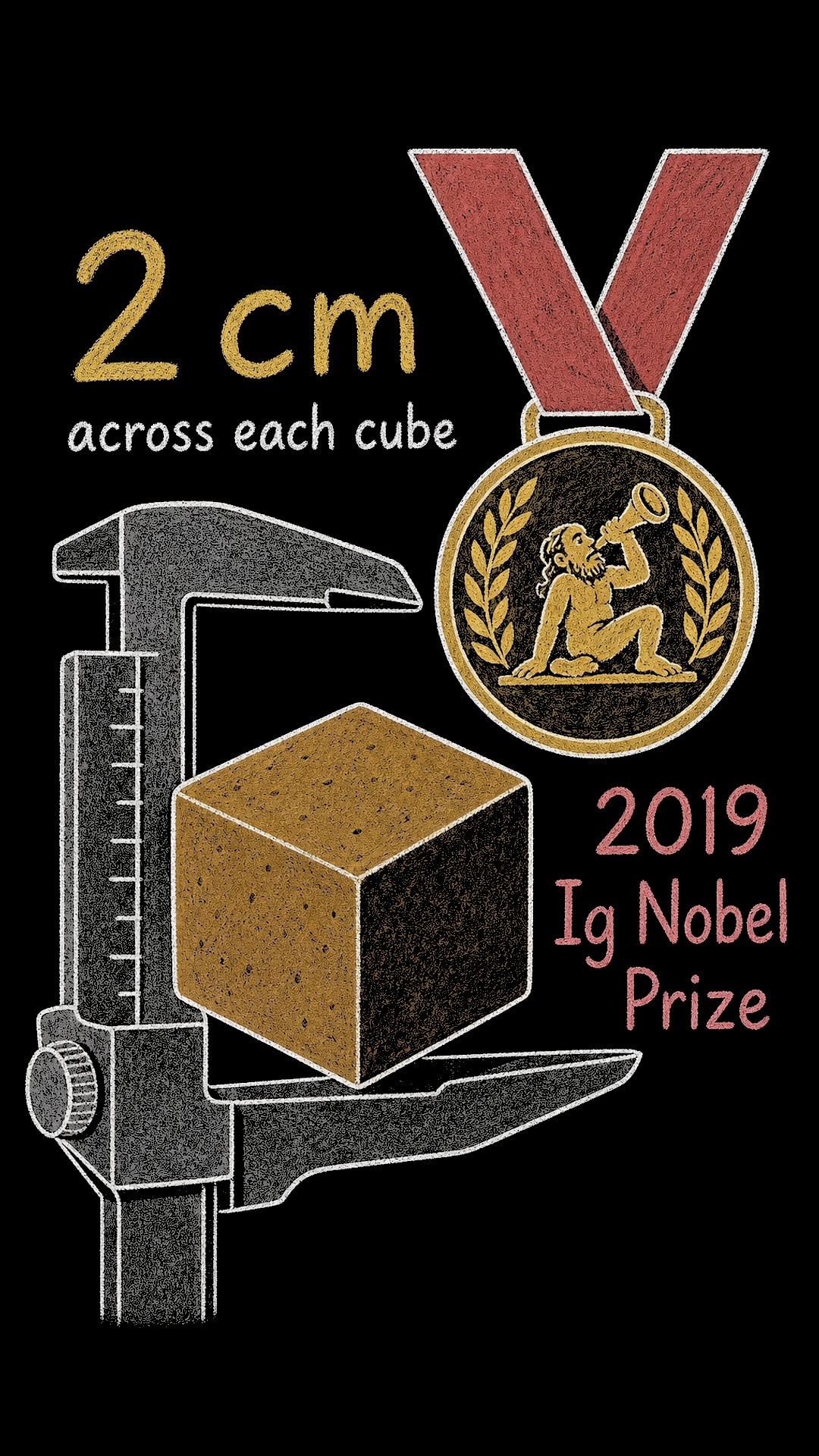
As the intestine pulls water out, the waste material dries and hardens. This loss of moisture is crucial, as it allows the block to retain its geometric shape even after it has been deposited. Each cube, which measures roughly two centimeters or about three-quarters of an inch across, is the perfect result of this drying process. The material becomes firm enough to keep its sharp edges, acting like a little brick of compressed earth and fiber. Because of the importance of this discovery in understanding how soft materials can be molded into shapes, the team of researchers who first studied this process was awarded the Ig Nobel Prize in physics in 2019. This recognition highlights how biological studies can even influence the way we think about engineering and the physics of matter in the wider world. The next time you see a tiny, stacked pile of blocks on a log in the wild, you are looking at a brilliant piece of biological engineering left by an animal with a unique way of talking to its neighbors.